
Gadgil on family restructuring, budget-conscious gold buying, bridging legacy with a digital-first generation, and why his new book, Choosing Gold, is his story first and a PNG story second.
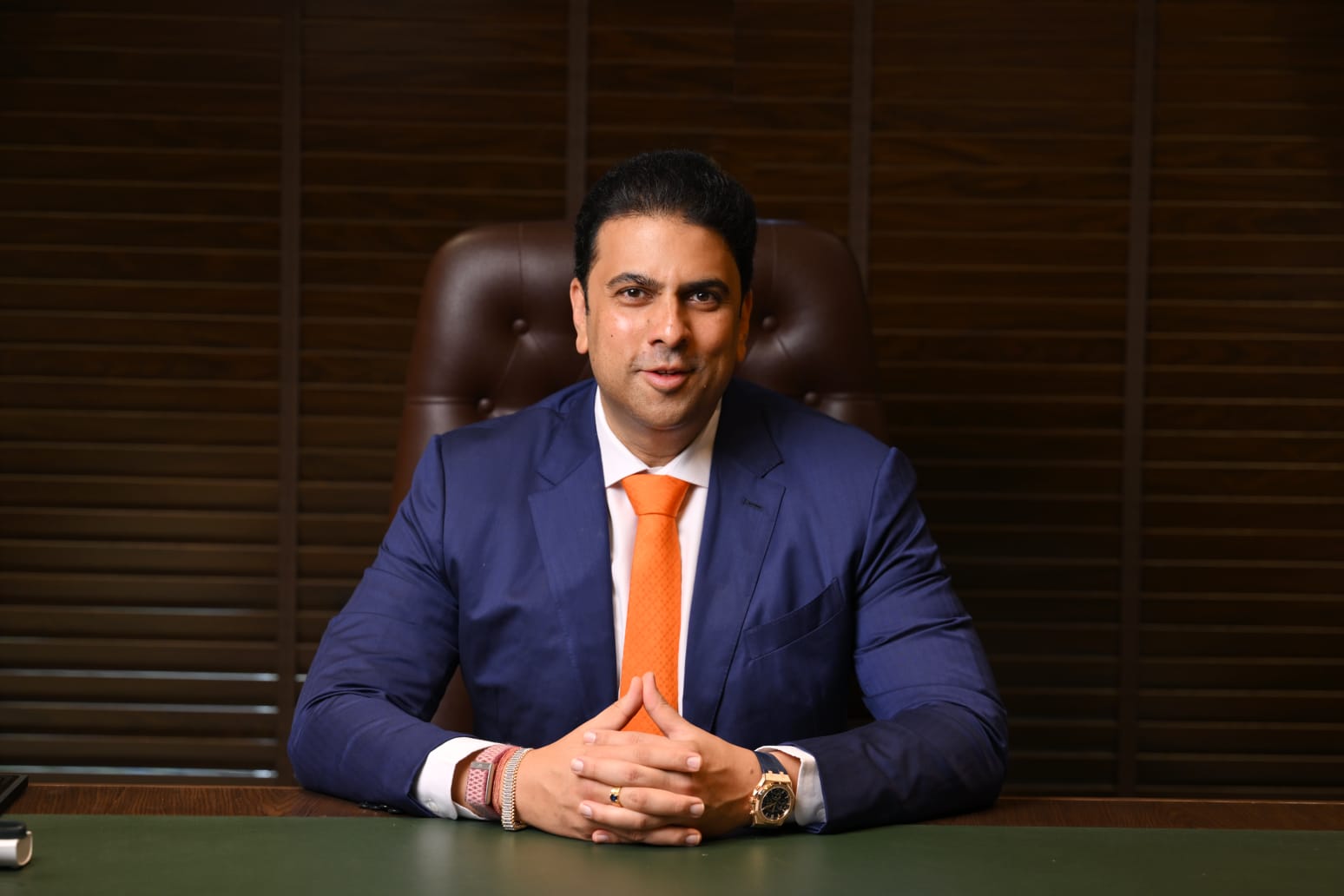
In a one-on-one conversation in Mumbai, Saurabh Gadgil, Chairman and Managing Director of PN Gadgil Jewellers (PNG), spoke at length on the launch of his book Choosing Gold — a 15-chapter account of his 25 years in the business, written for entrepreneurs rather than jewellery insiders. The conversation moved between the book and the business it grew out of: PNG's listing in September 2024, its answer to record gold prices, the new-age retail format built for a younger consumer, and the choices — including a family restructuring — that shaped the group along the way. Excerpts from the interview, in Gadgil's own words.
Q: With gold prices at historic highs, how are consumer buying patterns changing, and what is PNG Jewellers doing to keep jewellery accessible without compromising on design and value?
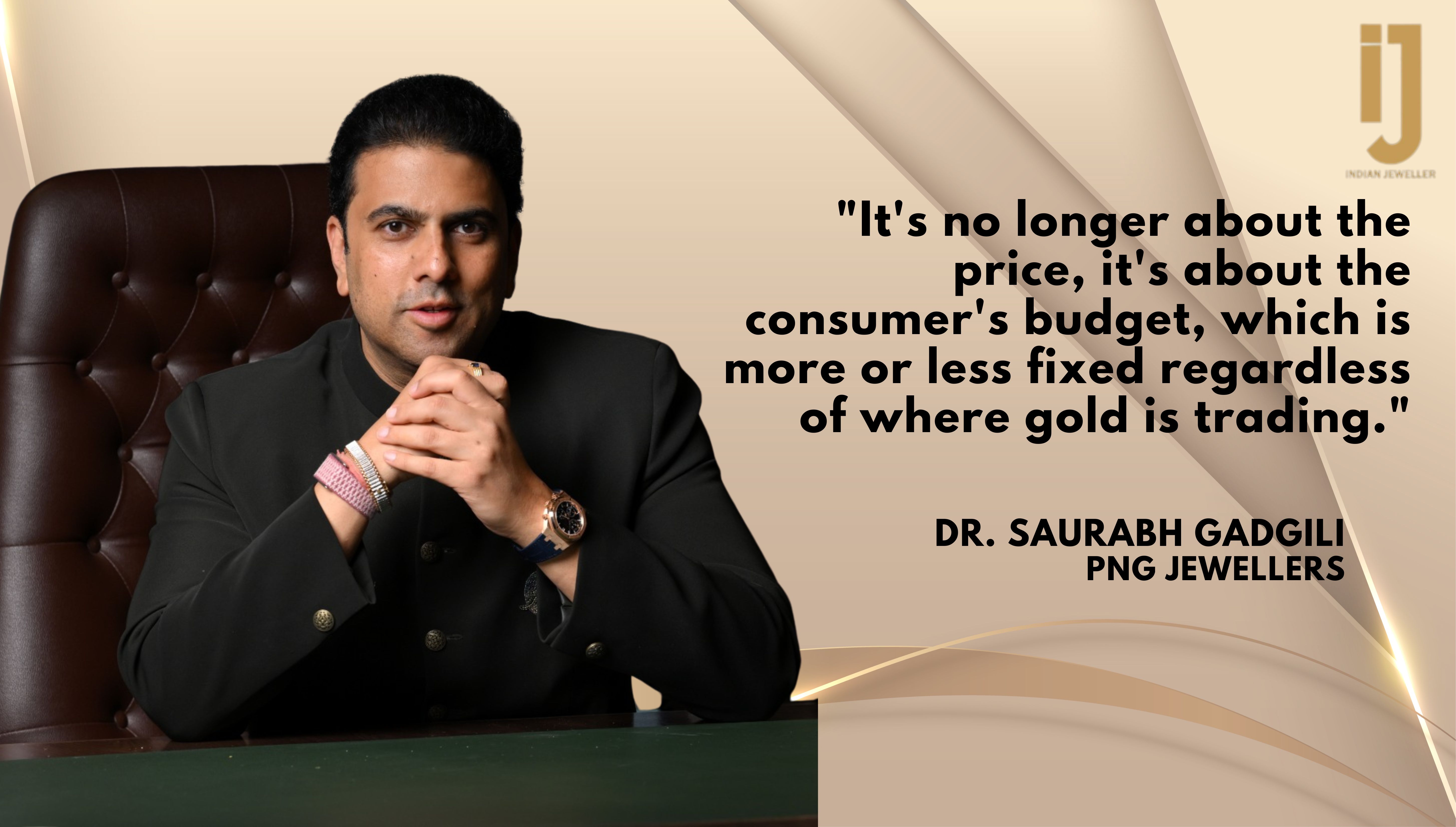
When I joined the business, gold was around ?4,000. Prices have moved a great deal since — but honestly, that's not the number that drives behaviour any more. What's changed is that it's no longer about the price, it's about the consumer's budget, which is more or less fixed regardless of where gold is trading. So the question we ask internally isn't "what does gold cost today," it's "how do we design within what the customer has decided to spend."
That's pushed us toward lower-purity jewellery and lighter-weight pieces, and toward design choices that let someone stay within their budget without feeling like they've settled for less. The craft has to work harder to hold the value when the metal content is doing less of the talking. It's less about a single scheme or format and more about rethinking design at the product level, category by category, so accessibility doesn't come at the cost of how the piece actually looks and feels.
Q: PNG Jewellers's IPO marked an important milestone for the company. How has the listing helped the business in terms of growth, expansion, brand visibility and access to capital?
A listing pushes you to grow — it isn't optional once you're public. It opens up the opportunity to explore new markets, and it elevates the brand in a way that compounds: a stronger brand helps you attract better professionals, and better professionals help you understand your audience more sharply. All of that reinforces itself after an IPO in a way that's hard to replicate as a private company.
There's also a discipline that comes with it that I didn't fully anticipate. Ahead of results, we go into what is effectively a silent period — you don't speak, because whatever you say can move the market whether or not it's accurate. It's changed how I think about the business itself: less like a founder running a store, more like an investor evaluating a portfolio — how a business is measured, how it's planned, how it's communicated. As a legacy company, the real work now is understanding how to connect where we come from with where the next generation of the business, and the next generation of the customer, is headed.
Q: As a legacy brand with a strong regional identity, how are you balancing tradition and heritage with the expectations of a younger, digitally connected consumer?
That question of connecting present and future is exactly why we recently launched You by PNG. It's built as a bridge — different from the layout you'd associate with a traditional legacy store, where there are counters and staff behind them. You by PNG has an open, island-style, free-flowing layout, with design language that's deliberately differentiated from the legacy format.
The bigger shift, though, is in occasions, not just format. Younger consumers don't only buy jewellery around the traditional calendar — Diwali, a wedding. They create their own occasions: a first salary, a friend's birthday, a new home. You by PNG is built around that idea — it isn't tied to the traditional occasion, it's tied to what matters to the individual. The bet is that once this generation is engaged on that platform, they'll eventually move into the legacy platform as their needs — and their budgets — evolve. That's the whole logic of running two formats side by side rather than trying to stretch one format to cover both audiences.
Q: PNG has grown from a single Pune store to a pan-India presence — what's one decision along the way you'd call a genuine turning point, not just a milestone?
Early in my journey, I met a Harvard professor and told him about our legacy — over 175 years old at the time — and how many locations we had. When he heard we had just one store, he said, "Sorry, but one store is a hobby. It's not a business." That stayed with me. When I came back, that was the turning point — deciding whether I wanted to run a hobby or run a business. Once I decided it had to be a business, everything followed from that: how the business needed to change, how family roles needed to be redefined across generations, how store expansion had to happen, and what the highs and lows of diversification would look like.
Q: How did the restructuring within the family come about, and what did it teach you about protecting the brand through change?
We call it a restructuring rather than anything more dramatic. It happened, by coincidence, during a period when an excise strike had shut the jewellery industry down. My uncle came to me and said he wanted to move out, and that he wanted to do it peacefully. We didn't bring in an external auditor — we used our own CA and did the business valuation ourselves. Operationally, my belief is that you handle these things as peacefully as possible, because at the end of it, it's your brand that's at stake.
In hindsight, it worked out for both sides. When two people are building something together, their pace and their thinking start to differ, and there's enough room for each to grow on their own. Any restructuring done the right way tends to lead to better outcomes for everyone involved — that's what we saw play out.
Q: What's your read on succession and professionalising a founder-led jewellery business as it scales?
It has to work from both directions. On one side, you need the next generation on the same wavelength — you can't hand over everything at once, so you build in checks and measures, and a clear sense of the point at which you can start handing over more responsibility. On the other side, the next generation has to demonstrate they can carry it forward.
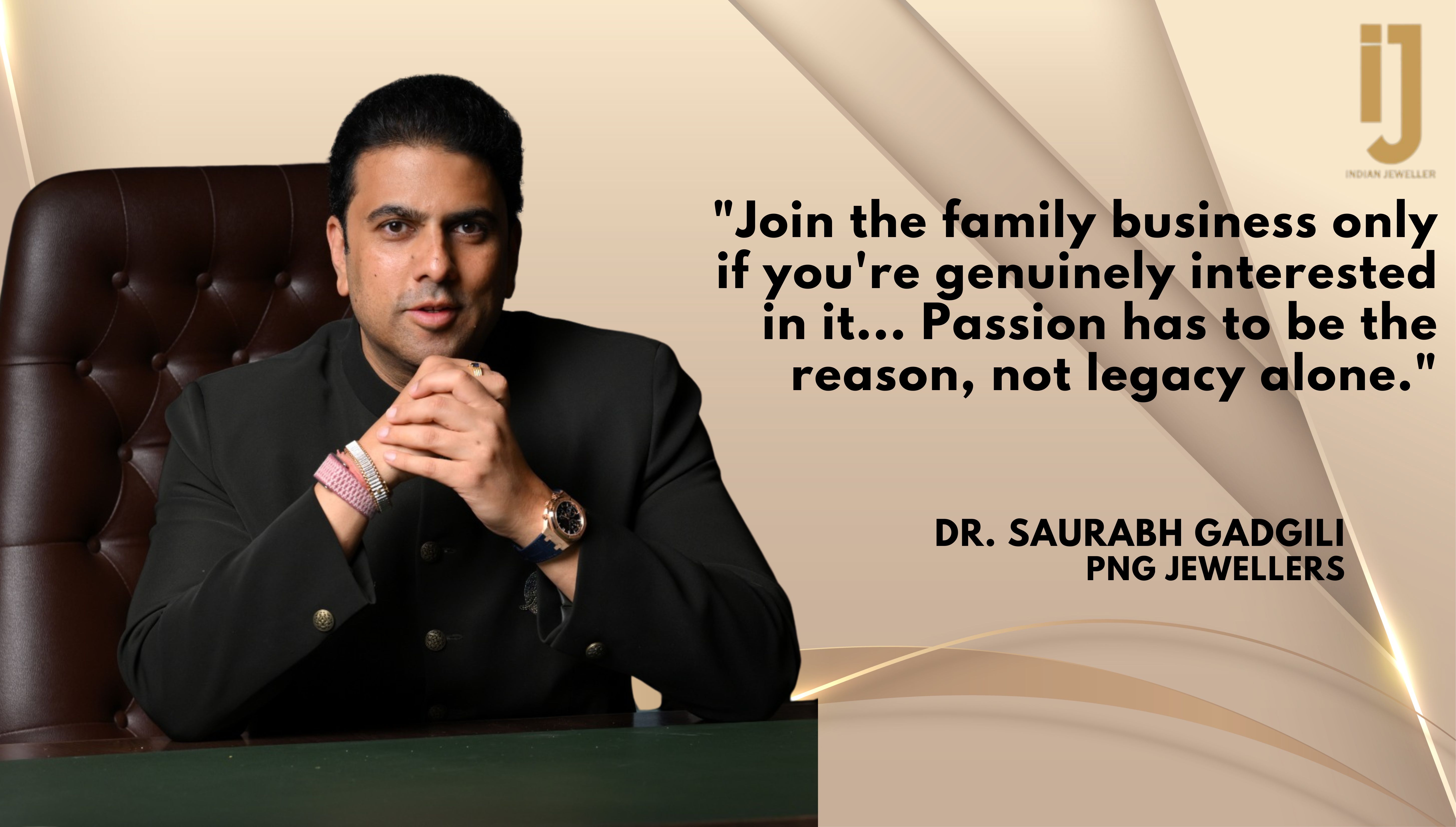
For us, the first real test of that was a simple question: can the store run without us? For years, the store was opened by us, closed by us, cash counters and purchases handled by us. So the question became what could be delegated, how, and with what reporting and systems behind it. The previous generation has to build the trust to let go of parts of it; the current generation has to show it can take it ahead. And I'd add — join the family business only if you're genuinely interested in it. I've seen family businesses where the next generation stays out of obligation and it just doesn't lead anywhere. Passion has to be the reason, not legacy alone.
Q: Is Choosing Gold more a business memoir or a playbook for entrepreneurs — who did you write it for, and how did it get its title?
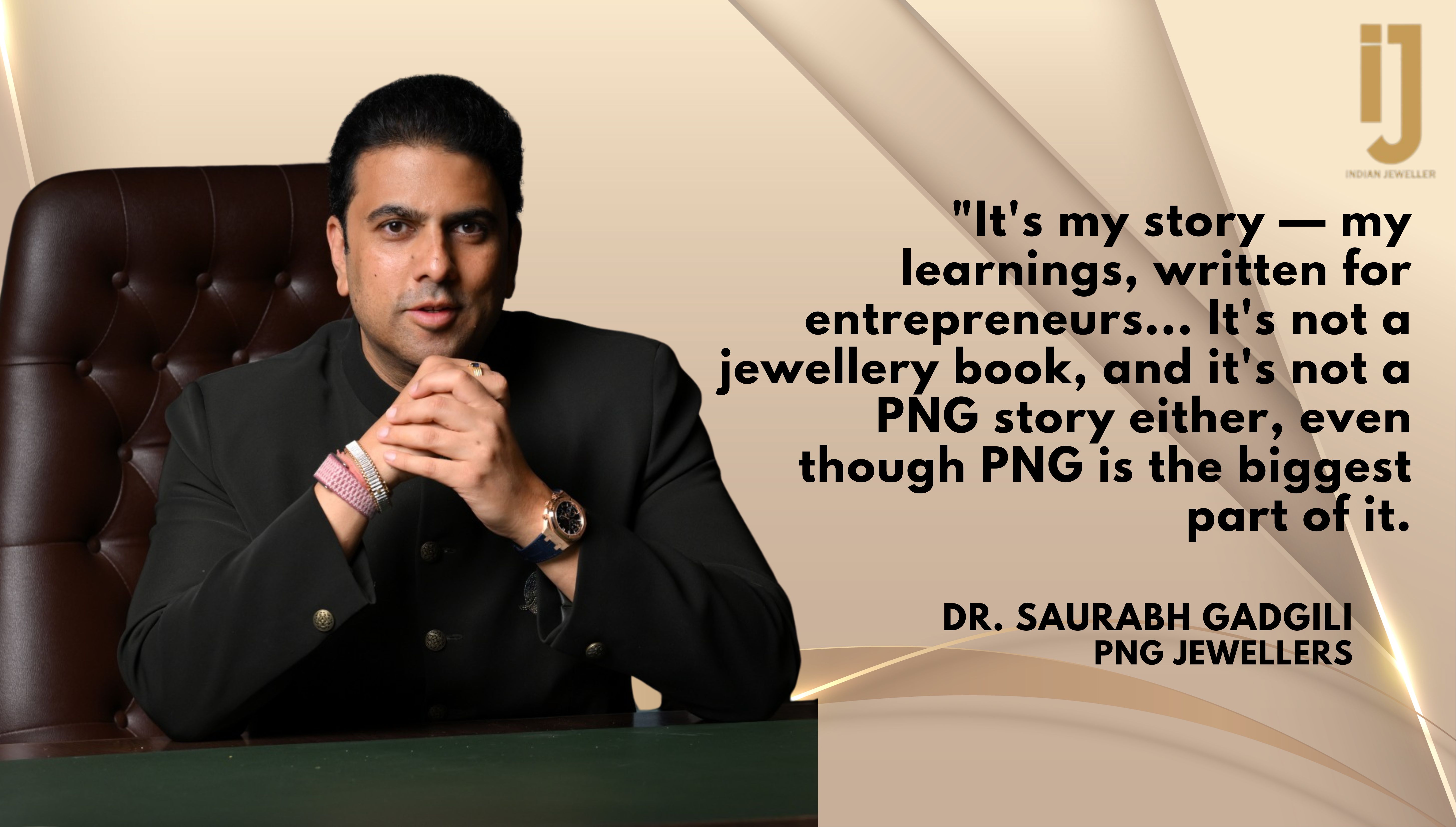
It's not a jewellery book, and it's not a PNG story either, even though PNG is the biggest part of it. It's my story — my learnings, written for entrepreneurs, and I'd like to see it read in schools and colleges as well. It covers 25 years, from 2000 to 2025: what our city looked like when we started, what the aspirations and challenges were at each stage, the people I met along the way — not all of them positive experiences, including people who worked against me at points — and what I took from each of those. There are no testimonials in it. I didn't want a book people quote from the outside; I wanted it to be honest about the personal failures and successes, not just the business ones.
The title took a while to land. We went back and forth on what to call it and how to tie it to gold. But life is full of choices, starting from the moment you wake up. And a gold medal is the ultimate prize you win. So Choosing Gold became about making the right choices — knowing that every choice has consequences, some leading to success and some to failure, and that the real skill is turning a failure into a learning rather than a story you keep blaming other people for.
Q: How is the book structured, and what shaped that approach?
It's not written as a chronicle of events. Each of the fifteen chapters is built around a business lesson — what happened, what I did, and what I learned from it, in the spirit of a Harvard case study: a situation at a point in time that the reader has to work through and decide how it applies to them. There's no right or wrong laid out — just what actually happened to me and what I took from it. Two books shaped how I thought about writing it: Sam Walton's Made in America, on how a retail business gets built, and a Richard Branson book on how far a brand can be stretched before it snaps — the idea that a brand behaves like an elastic band; you can expand it, but you have to know the point at which it won't take any more.
Q: Looking back at PNG's growth, which phase of the journey has meant the most to you?
I'd say 2015 to 2018. That was the most exciting period, in the sense that it taught me the most. There was a lot of diversification happening and a lot of challenges alongside it, and I think the real test of a business happens during the challenges, not the smooth periods. It's easy to blame external factors when something doesn't work; what matters is how you work your way out of it. That phase, more than any other, has been the most meaningful part of this growth story for me.

Be the first to comment