
GIA plays a key role in establishing authenticity and trust in jewellery retail — it brings credibility, transparency, and confidence to the entire ecosystem, Amit Pratihari, MD, GIA India, tells Khursheed Mistry.
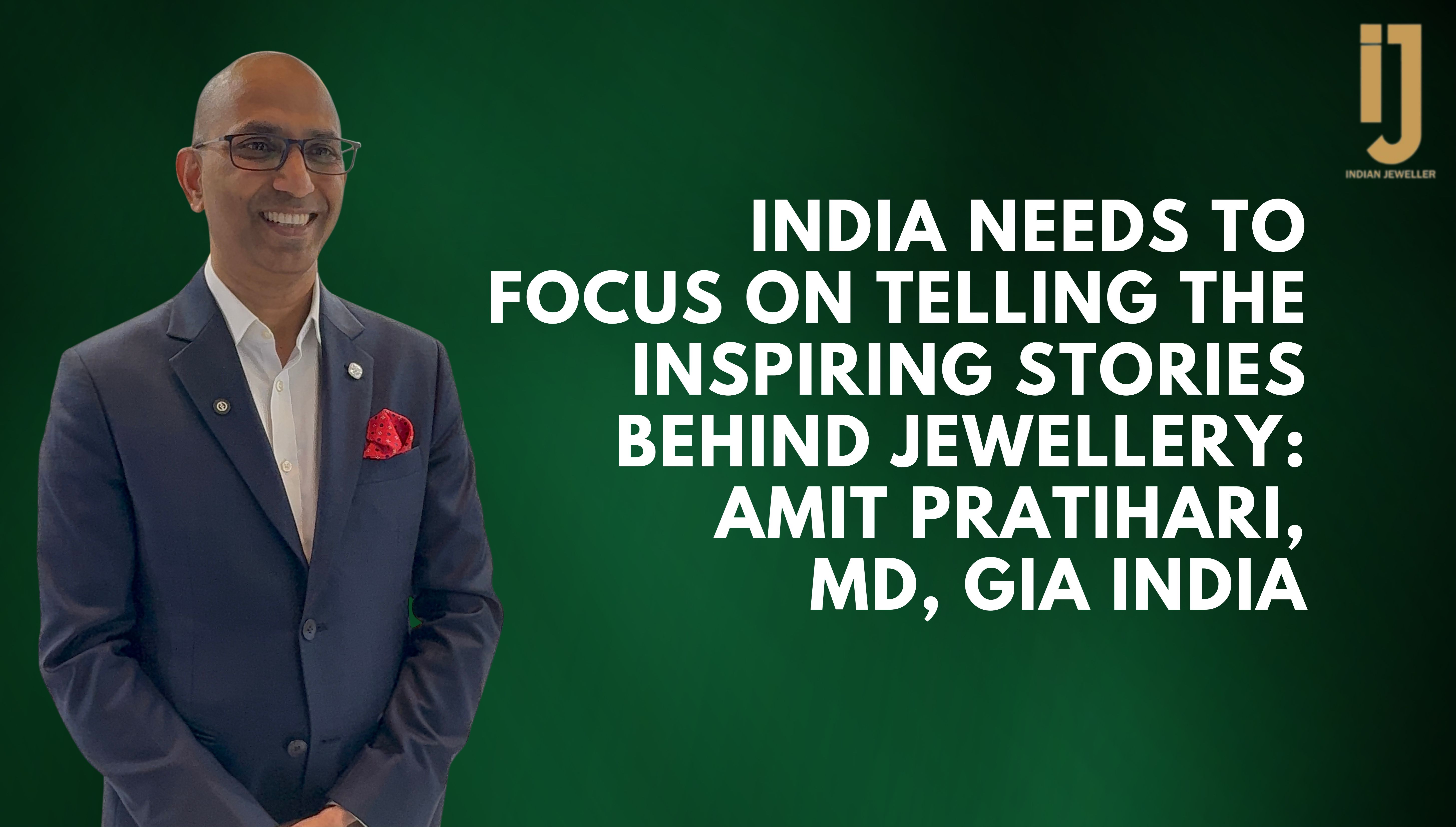
A: My journey at GIA has been full of excitement. I joined believing I knew a lot about diamonds, but within a few seconds, I realised how differently GIA looks at them. GIA does not see diamonds the way the world traditionally does — it sees them through research, scientific signs, and the translation of those signs into meaningful, factual messages.
That has made the experience extremely enriching. What also stands out strongly are GIA’s values, which are especially important in today’s business environment. GIA stands for legacy, and for protecting the industry’s trust. It takes a wider view of how the industry can move forward responsibly, and that makes this journey very special for me.
I am also excited about the team at GIA. Many people here have been with the organization for 15, 20, even 25 years, which speaks volumes about the institution. When Robert M. Shipley founded GIA in 1931, he took a radical approach for that time — he believed that if there is a problem in the industry, it begins with people, not stones. That is why GIA started as a school before becoming a laboratory. Education has always come first, and that continues to define GIA today.
A: This has become one of my favourite ways to explain GIA. Imagine a world where there are no standards — where a flawless diamond means one thing in Mumbai, and something entirely different in New York. Imagine diamond value being driven purely by opinion, rather than facts.
That would create confusion and mistrust, making the business almost blind. GIA changed that by creating a universal language for diamonds. Today, someone sitting in Surat can confidently do business with someone in San Francisco because they are speaking the same factual language. That, to me, is GIA’s true uniqueness.
A: India’s domestic gem and jewellery market is already around $ 91 billion, and we are on track to become the world’s largest jewellery market in the coming years. The opportunities far outweigh the challenges. There is aspiration, rising disposable income, and strong participation from the growing middle class.
Jewellery is deeply rooted in Indian culture, so demand is not a concern. However, what we need to focus on is telling the inspiring stories behind jewellery — how it is made, where it comes from, and why it holds value. That emotional and factual connection is critical.
At the same time, jewellery retail is no longer limited to the physical counter; it has moved to digital platforms as well. The challenge is how to establish authenticity and trust in both physical and digital environments. This is where GIA plays a key role — by bringing credibility, transparency, and confidence to the entire ecosystem. Ultimately, when consumers buy jewellery, they are buying peace of mind. In India, jewellery is not just adornment; it is also a store of wealth, and protecting that trust is essential.
A: In today’s world, five years can feel like five decades. Rather than thinking too far ahead, my focus is on building strong partnerships today that will naturally carry us forward over the next five years.
GIA has always been an institution rooted in education and trust. Our goal is to empower retailers, strengthen our alumni network, and support the industry with knowledge and credibility. By doing that consistently, we believe we can help the Indian jewellery industry move forward responsibly and sustainably.





Be the first to comment