


GSI has outlined how diamond screening challenges have evolved over the past decade, citing increased laboratory-grown diamond volumes, mounted jewellery verification requirements and the need for consistent product integrity protocols.
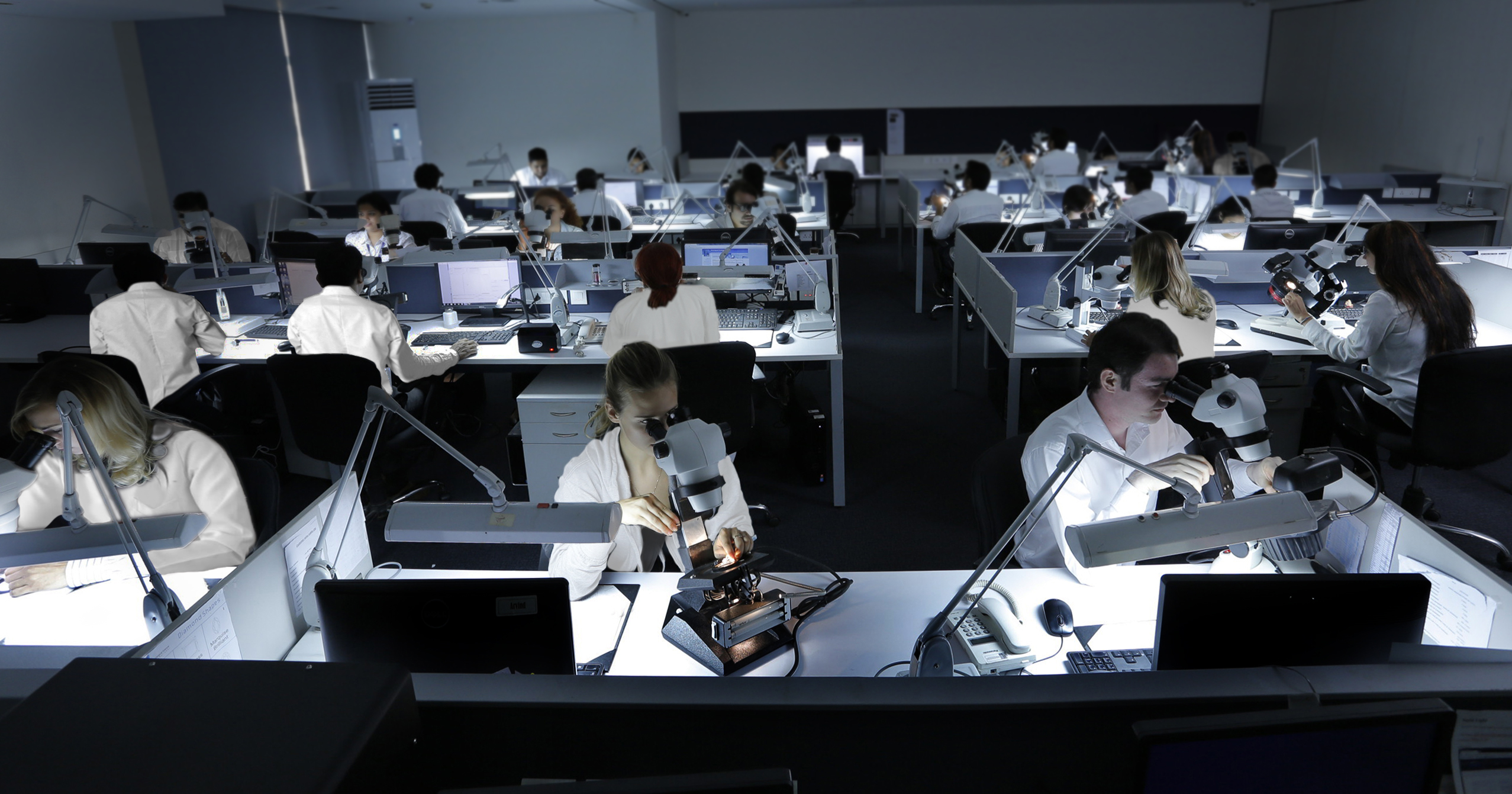
The challenge of identifying undisclosed laboratory-grown diamonds has evolved significantly over the past decade, according to Gemological Science International (GSI), which says the issue now extends beyond detection to broader product integrity concerns across the diamond and jewellery supply chain.
In a recent industry update, GSI noted that ten years ago the primary concern centred on identifying laboratory-grown diamonds that had been mixed into parcels of natural diamonds. At the time, laboratories focused on building scientific capabilities, including acquiring specialized instruments, training gemologists and establishing screening protocols.
According to GSI, the industry today faces a more complex environment. In addition to undisclosed laboratory-grown diamonds in natural diamond goods, the trade must also address natural diamonds appearing in laboratory-grown diamond products, diamond simulants, treated stones and inconsistencies in screening practices.
The laboratory stated that advances in screening technologies, including fluorescence-based screening, FTIR spectroscopy, photoluminescence spectroscopy, Raman spectroscopy, deep-UV imaging, phosphorescence analysis and low-temperature testing, have improved identification capabilities. However, it cautioned that laboratory-grown diamonds have also become more sophisticated, making separation from natural diamonds increasingly challenging in certain cases.
Another significant shift highlighted by GSI is the scale at which screening is now required. While laboratories previously dealt largely with individual stones or small parcels, major retailers and manufacturers now require verification programmes covering thousands of jewellery items and potentially hundreds of thousands of diamonds.
“While a laboratory may be able to correctly identify an individual loose stone under ideal conditions, reliably screening thousands of mounted jewelry pieces under commercial production timelines is a far more complex and challenging process,” the organization stated.
GSI noted that mounted jewellery presents additional testing challenges because stones may be partially covered by metal, positioned at varying depths, grouped closely together or be too small for some testing methods. As a result, screening increasingly requires workflow management, quality-control systems and escalation procedures alongside instrumentation.
The organization also pointed to what it described as a growing “reverse problem” within the industry. As laboratory-grown diamonds become a larger commercial category, retailers and manufacturers must also verify that goods represented as laboratory-grown are genuinely laboratory-grown. According to GSI, inventory errors, supplier mistakes and product misrepresentation can all contribute to natural diamonds appearing in laboratory-grown diamond goods.
The company further emphasised the continuing role of diamond simulants such as moissanite, cubic zirconia and other synthetic stones in product verification programmes. It warned against overreliance on individual screening instruments, stating that no single technology can address every identification challenge, particularly in mounted jewellery and high-volume production environments.
Looking ahead, GSI said artificial intelligence could support image recognition, pattern detection and workflow efficiency in screening operations. However, it maintained that AI would complement rather than replace gemological expertise and advanced analytical testing.
Concluding its assessment, GSI stated that verification and screening are expected to remain a permanent requirement for natural diamond, laboratory-grown diamond and mixed-category jewellery supply chains, making product integrity an increasingly important operational consideration for manufacturers, retailers and laboratories.










Be the first to comment