


With IIJS Bharat – Premier 2026 set to expand in scale and ambition, Shaunak Parikh, Vice Chairman of GJEPC, outlines the strategy for the show, export growth, and industry priorities, in a conversation with Dhwani Rathod.
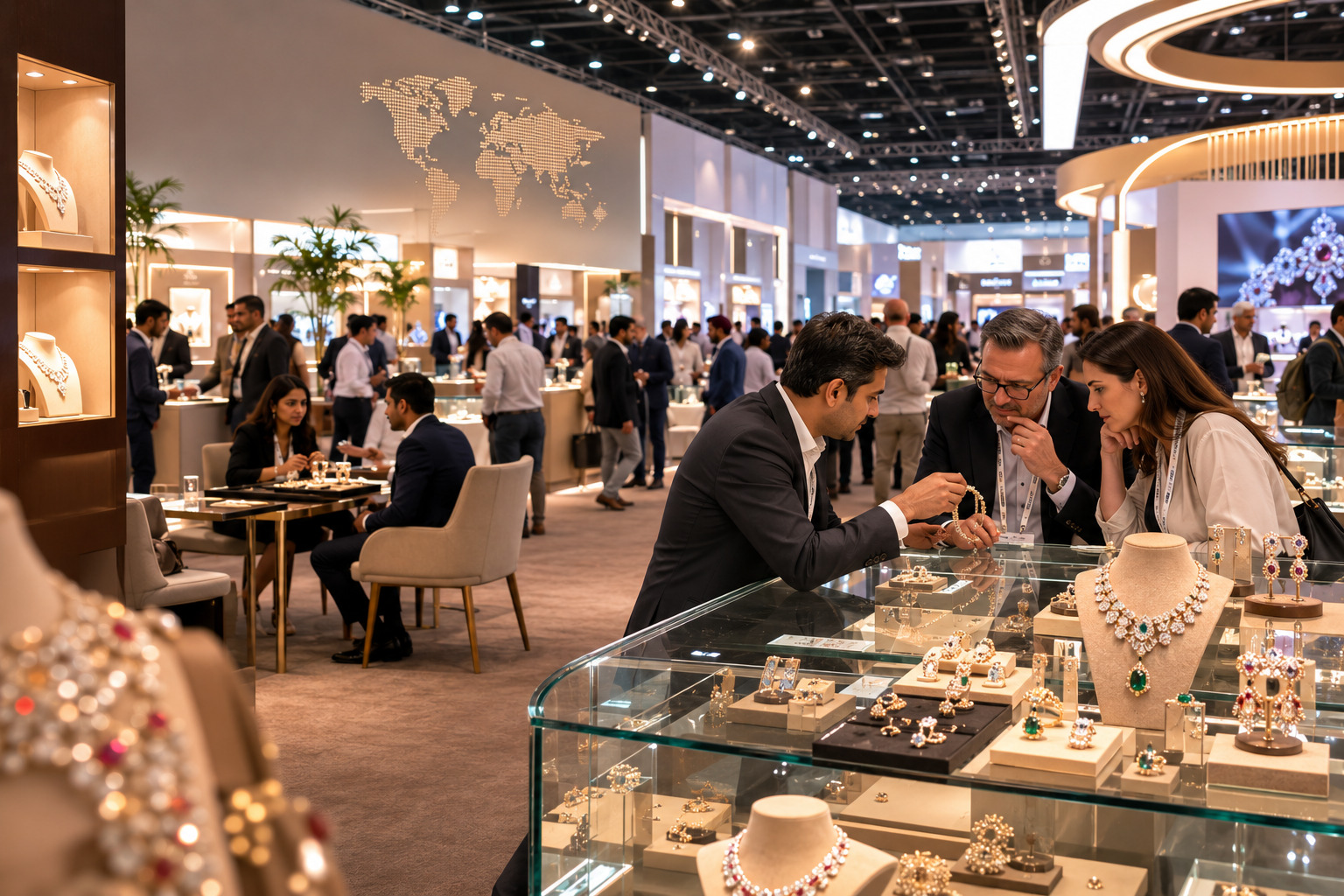
A: While the redevelopment at the NESCO venue has created some disruption, we have turned it into an opportunity to create more product-centric sections. Our main objective is to provide the best possible experience for our buyers. We have worked on consolidating product categories —which were previously spread across different halls and locations — into single, or fewer halls. This shift allows for easier navigation, ensuring buyers can move through different categories with much more efficiency.
A: I believe change is the only constant, and while there is often a fear of the unknown, these changes will yield a better experience for buyers in the long run. To ensure strong footfall, we conducted Retail Connect programmes in 16 cities across India. I am happy to report that visitor registrations are already up by 15%, compared to the same period last year. Internationally, we have conducted door-to-door visits, and expect multiple global delegations, so we are very confident about the show.
A: There is a natural synergy, because we are all manufacturers, and machinery is a critical extension of that process. By hosting both under one roof, we provide a captive audience for machinery exhibitors, and a convenient way for jewellery manufacturers to explore new technology and innovation without having to travel for a separate event. It allows the trade to see the latest products that can help them become more competitive globally.
A: IIJS Premier is the second-largest show in the world. Despite past challenges with gold rates, the market has stabilized, and we are seeing consumers back in stores. This is the ultimate platform to find new manufacturers, view the latest collections, and interact with suppliers just as we enter the peak season. There is simply no better platform to prepare for the business year ahead.
A: The GJEPC acts as a critical intermediary because it is not practical for authorities to interact with hundreds of thousands of individual stakeholders. We translate the ground-level needs of the industry into policy suggestions, and communicate the government's vision back to the trade. One of our most significant recent achievements has been bringing back the credibility of the industry to all stakeholders, including financial institutions, by providing accurate information about our progress.
A: We are currently at roughly $32 billion in exports, and we are working with the Boston Consulting Group (BCG) to create a roadmap for reaching the goal of {2}lt;/span>100-billion in exports. While India is already a global leader in loose natural and laboratory-grown diamonds, our market share in the global jewellery sector is still small. Therefore, the finished jewellery segment will be the major engine for this next phase of growth, as we aim to become a dominant global player in that category.






Be the first to comment