


India’s silver jewellery manufacturers could see faster import approvals following the DGFT’s move to simplify authorization procedures for specified silver products. The change may improve sourcing predictability and production planning; however, customs duties and import restrictions remain unchanged, finds out Suneeta Kaul.
India’s silver jewellery manufacturers are likely to encounter fewer procurement bottlenecks following the decision of the Directorate General of Foreign Trade (DGFT) to simplify the issuance of import authorizations for specified silver products. The move introduces a self-declaration-based procedure for eligible applicants, with the objective of reducing processing time, and improving the ease of doing business.
The relaxation comes against the backdrop of tighter import controls introduced earlier this year, when the government shifted the import policy for specified silver products from ‘Free’ to ‘Restricted’, making import authorizations mandatory under the applicable provisions. The change had introduced an additional procedural requirement for businesses dependent on imported silver, with potential implications for sourcing schedules and production planning.
Faster Authorizations, Greater Predictability
For manufacturers operating with tight production schedules, the principal benefit lies in the possibility of securing import authorizations more efficiently. Delays in obtaining approvals can complicate procurement planning, affect the timing of raw-material availability, and create uncertainty around production commitments.
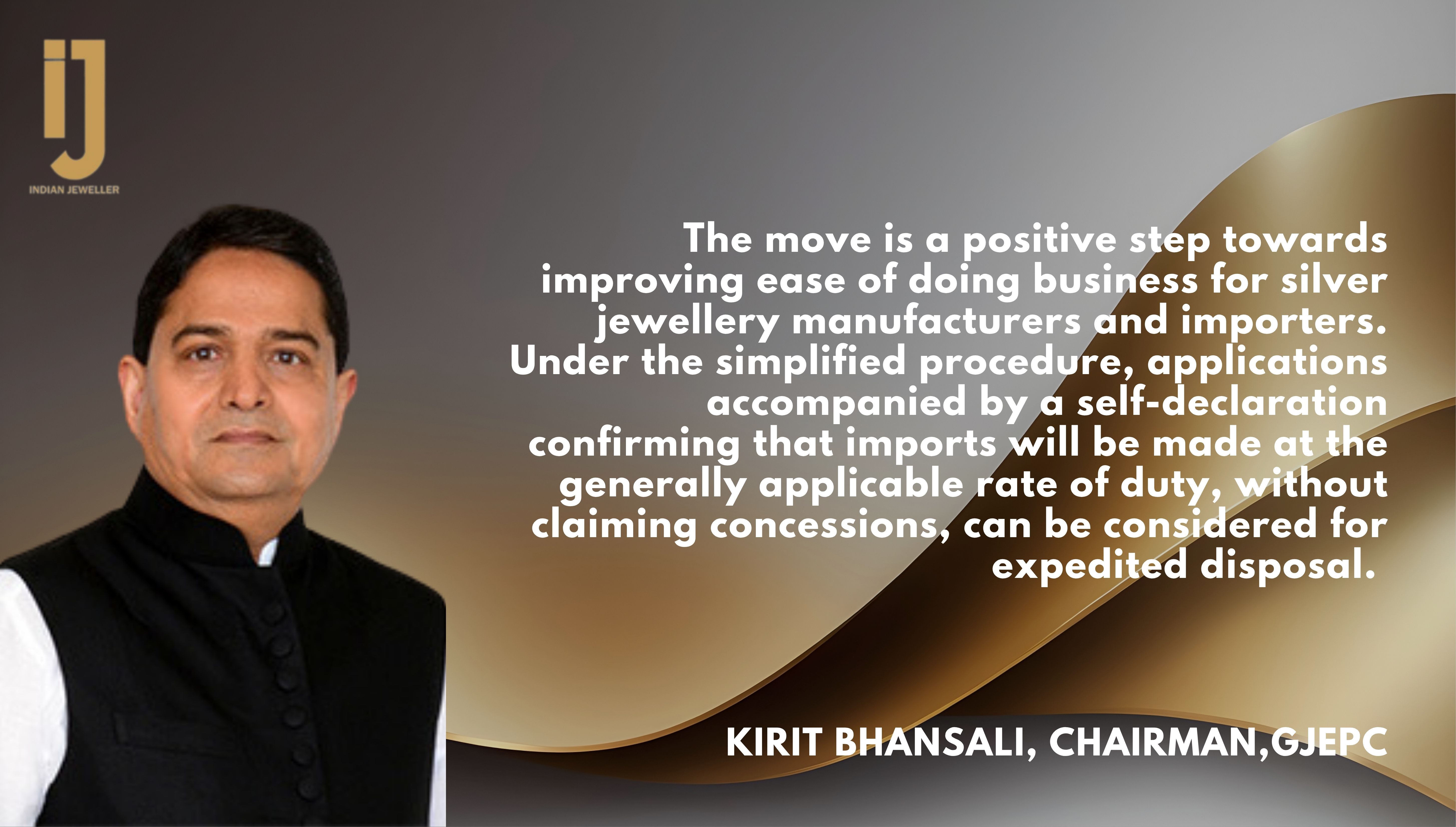
Commenting on the development, Kirit Bhansali, Chairman, Gem & Jewellery Export Promotion Council (GJEPC), says, “The move is a positive step towards improving ease of doing business for silver jewellery manufacturers and importers. Following the change in the import policy for specified silver products from “Free” to “Restricted” under DGFT Notification numbers 17/2026-27 and 19/2026-27, importers were required to obtain authorizations, with applications subject to scrutiny and verification.
“Under the simplified procedure, applications accompanied by a self-declaration confirming that imports will be made at the generally applicable rate of duty, without claiming concessions, can be considered for expedited disposal. This is expected to reduce processing time for eligible applicants.”
The distinction is important: the revised procedure facilitates faster consideration of qualifying applications, rather than removing the authorization requirement altogether. Applicants must still complete the prescribed formalities, and provide a reasoned justification for the quantity and value of imports sought. DGFT also retains the right to seek additional documents, or conduct detailed scrutiny, where necessary.
Easier Access, But No Direct Cost Advantage
While the procedural change could help manufacturers secure imported silver with greater predictability, it does not alter the customs duties applicable to their imports. Consequently, the immediate benefit is operational, rather than financial.
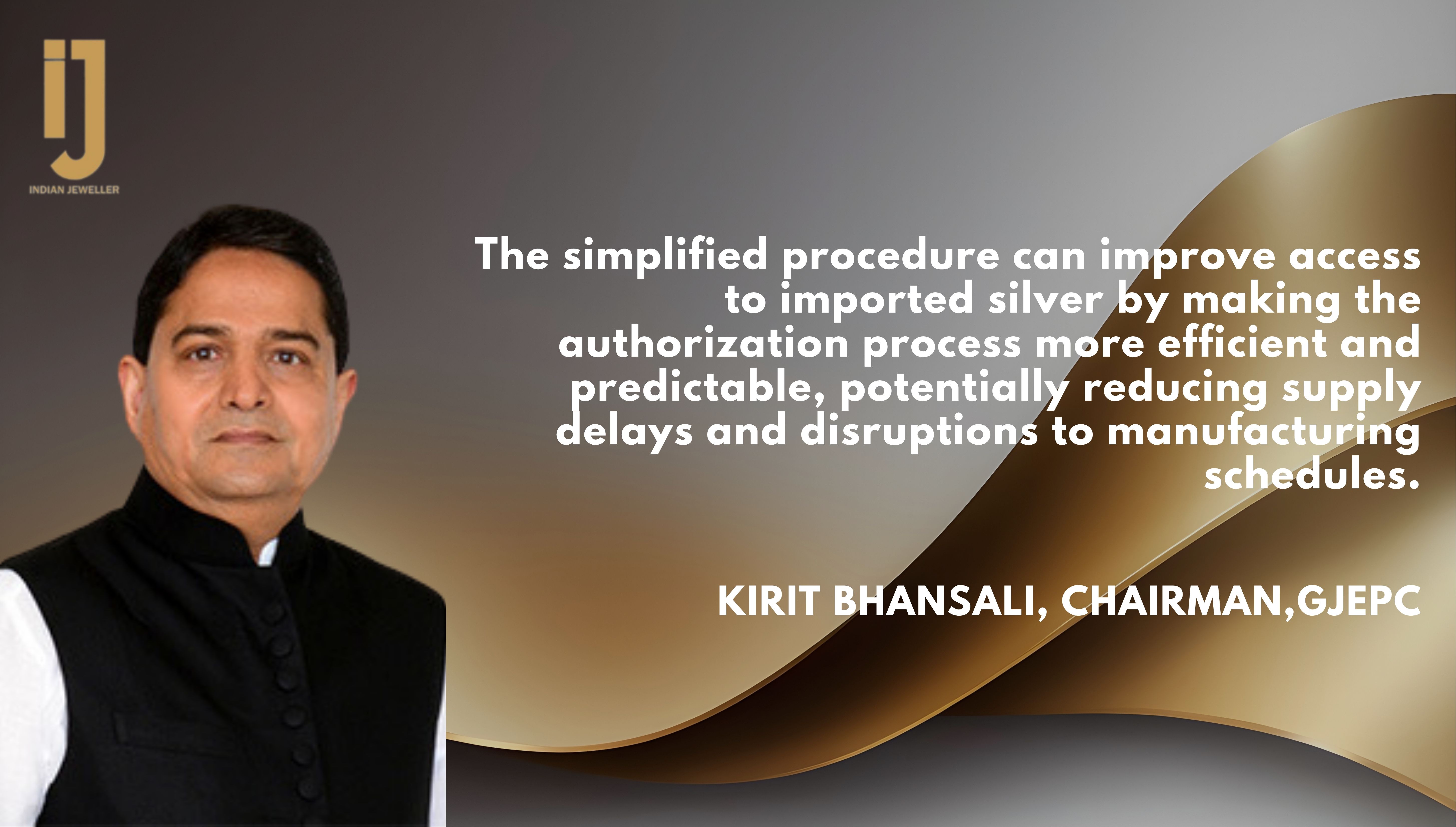
“The simplified procedure can improve access to imported silver by making the authorization process more efficient and predictable, potentially reducing supply delays and disruptions to manufacturing schedules,” Bhansali says.
However, he cautions against interpreting the relaxation as a measure that will materially lower procurement costs. “It has to be noted that this is unlikely to significantly reduce procurement costs, as customs duties remain unchanged. Any cost benefits would largely be indirect, arising from better inventory management, improved production planning, and reduced sourcing uncertainty, rather than lower import duties or landed costs.”
Who Benefits From the Relaxation?
Silver jewellery manufacturers, exporters, and eligible importers who rely on imported silver are among the businesses likely to benefit from the simplified procedure. Those whose production schedules depend on timely access to imported raw materials could gain from a more predictable authorization process.
The extent of the benefit, however, will depend on whether applications meet the prescribed conditions and how effectively the revised procedure reduces processing delays in practice.
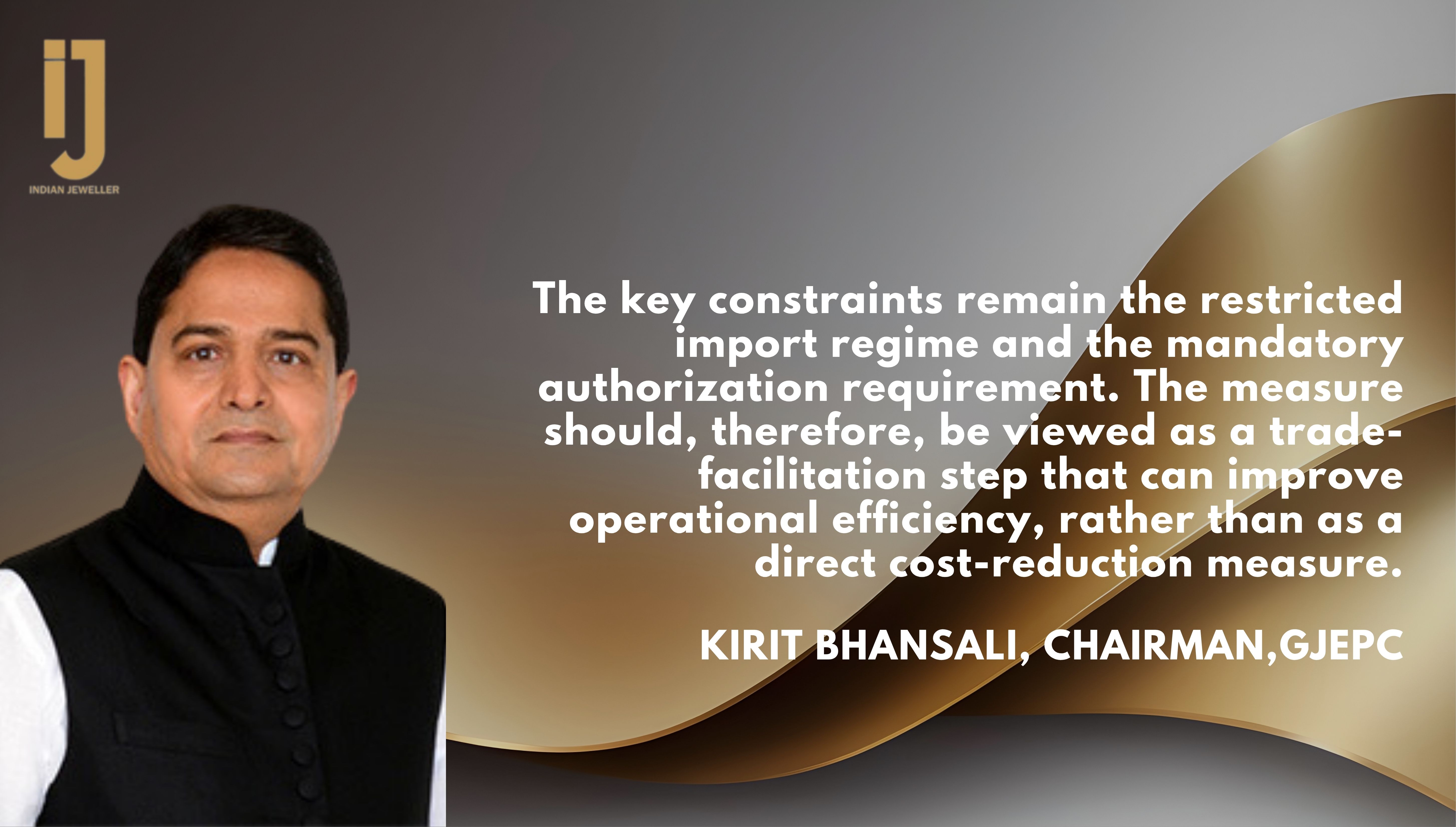
“The key constraints remain the restricted import regime and the mandatory authorization requirement. The measure should, therefore, be viewed as a trade-facilitation step that can improve operational efficiency, rather than as a direct cost-reduction measure,” Bhansali adds.
A Procedural Relief, Not a Policy Reversal
The DGFT relaxation represents a calibrated easing of the administrative burden created by the restricted import regime. It seeks to facilitate legitimate trade through faster processing for eligible applicants, while retaining regulatory oversight, and the requirement to obtain authorization.
For India’s silver jewellery industry, the significance will ultimately lie in how much the revised procedure improves the reliability of raw-material sourcing. More predictable approvals could help manufacturers plan production and inventory with greater confidence, particularly where imported silver is integral to their operations.
The measure does not, however, address the broader cost pressures associated with importing silver. With customs duties unchanged, and authorization requirements still in place, its immediate contribution is to streamline the process, rather than make silver cheaper.



Be the first to comment