


Palmonas’ latest campaign reflects how jewellery marketing is being reworked through narrative-led celebrity use, product-first communication, and lower entry price points, as brands align messaging with everyday consumption habits.
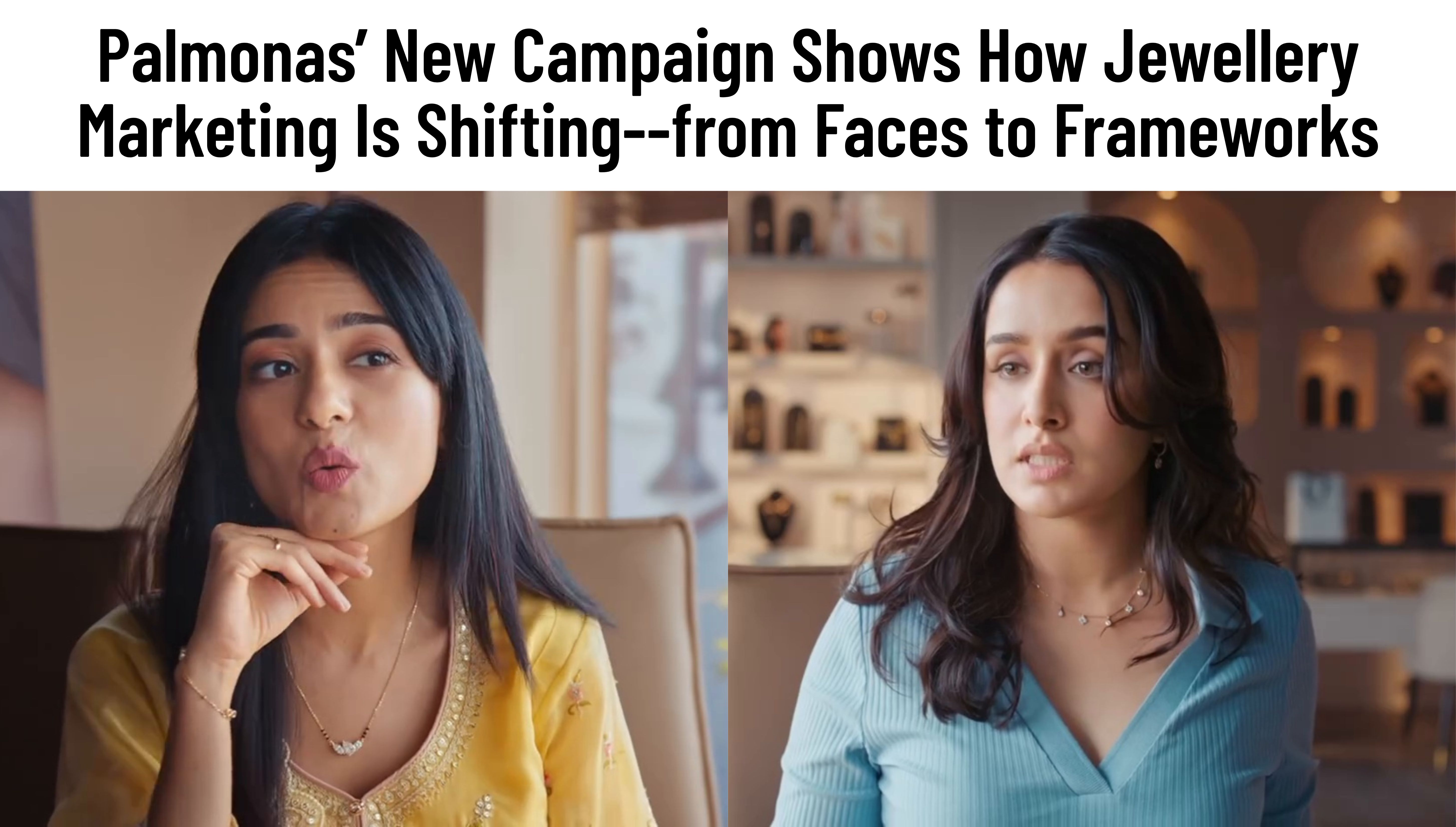
Jewellery marketing in India has traditionally leaned on a predictable structure: a recognizable celebrity face, high-gloss imagery, and an aspirational narrative closely tied to milestones such as weddings and festivals. While that model continues to coexist with newer formats, recent campaigns suggest that brands are beginning to experiment with different ways of communicating relevance, price, and usage.
One such example is the latest campaign of Palmonas, featuring Shraddha Kapoor alongside Amrita Rao. Rather than viewing it as an endorsement-led exercise, the campaign can be read as a useful reference point for how jewellery marketing strategy is being recalibrated around storytelling structure, product anchoring, and lower entry price points.
From an industry lens, the campaign is less about celebrity association, and more about how brands are adjusting their marketing frameworks to align with contemporary consumption behaviour.
In conventional jewellery advertising, ambassador changes are often executed as clean breaks — one face exits, another takes over, and the brand narrative resets. In this case, the transition itself becomes part of the communication.
The campaign is structured as a light, conversational narrative, rather than a single, static endorsement. This reflects a broader shift in how brands are designing content for digital platforms, where continuity, familiarity, and short-form storytelling are prioritized over one-time visibility.
For jewellers observing these changes, the key point is not the creative execution, but the underlying strategy: marketing is increasingly being designed as an ongoing framework, rather than a campaign burst.
Another notable aspect of the campaign is how the celebrity association is scoped. Instead of acting as a blanket endorsement for the brand, the communication is tied closely to specific product categories and use-cases.
This approach reflects a shift from celebrity-first branding to product-first communication, where the ambassador supports context and relevance, rather than aspiration alone. The jewellery being highlighted is positioned as part of everyday wear, reinforcing frequency and flexibility, rather than occasion-led consumption.
For retailers, this distinction matters. When marketing aligns the ambassador with usage rather than status, it supports consumer behaviour that favours repeat purchase and wardrobe integration. Product-led storytelling tends to resonate more strongly in categories designed for regular wear and replenishment.
Beyond the communication format, the campaign also draws attention to a commercially important development: the increasing visibility of jewellery priced around Rs 9,000. This price range is emerging as a significant entry point for branded jewellery because it balances accessibility with perceived value. At this level, jewellery is positioned for self-purchase, rather than gift-led buying, and for repeat wear, rather than long-term storage.
From a trade perspective, this signals a gradual shift away from marketing jewellery exclusively as a milestone product. Instead, it reflects an attempt to normalize jewellery as a lifestyle purchase — closer to fashion in consumption rhythm, but still anchored in longevity. Sub-Rs 10,000 jewellery is increasingly functioning as a gateway category, introducing younger consumers to branded jewellery without the pressure of high-ticket commitment.
One of the broader strategic signals embedded in this campaign is the emphasis on frequency over occasion. As consumer behaviour evolves, especially among younger buyers, jewellery purchases are becoming less tied to festivals or weddings, and more integrated into everyday dressing.
This has implications beyond marketing. Retailers and manufacturers must consider how assortment planning, inventory cycles, and newness are aligned with more frequent buying patterns. Marketing that supports monthly or seasonal movement, rather than annual peaks, is increasingly relevant in this context.
While this campaign represents one brand’s approach, the strategies it reflects are not isolated. Narrative-led content, product-focused communication, and lower entry price points are becoming recurring themes across the industry.
For traditional jewellers, the relevance lies not in replicating the format, but in understanding the shift in consumer expectations:
These shifts do not replace legacy jewellery narratives, but exist alongside them, creating parallel tracks for different consumer segments.
As product quality, sourcing, and design capabilities become increasingly comparable, marketing strategy is taking on a more central role in differentiation. Campaigns like this underline how pricing, storytelling, and consumption logic need to move together, and not operate in silos.
Whether or not similar approaches are widely adopted, the larger signal is clear: jewellery marketing is being reshaped around everyday relevance, lower barriers to entry, and repeat engagement. For jewellers and manufacturers, understanding these frameworks is becoming as important as understanding product trends — because how jewellery is positioned is increasingly influencing how, when, and how often it is bought.


Be the first to comment