


India’s Economic Survey FY25–26 outlines how the gems and jewellery sector shaped exports, gold imports, inflation and lending, highlighting diversification gains and rising macro pressures for policymakers and industry.

India’s Economic Survey positions the gems and jewellery (G&J) sector as a macro-relevant industry influencing trade, inflation and finance, even as overall economic growth stood at 6.5% in FY25 with 7.4% projected for FY26.
On credit, loans against gold jewellery rose 125.3% year-on-year in November 2025, reflecting higher prices and liquidity needs. Revised MSME guidelines now permit voluntary pledging of gold and silver jewellery as collateral, while bank credit to G&J grew only 1.01% in FY25 versus a 4.53% CAGR in FY21–FY24.
In trade, merchandise exports were USD 437.7 billion, with volatility in petroleum and G&J affecting totals. Gems and jewellery shipments to the US fell 44.3% in April–November FY26, cutting the US share to 18.7% from 33.7%, while exports to the UAE rose 34.9% and Hong Kong 23.4%, lifting their combined share to 53.6%.
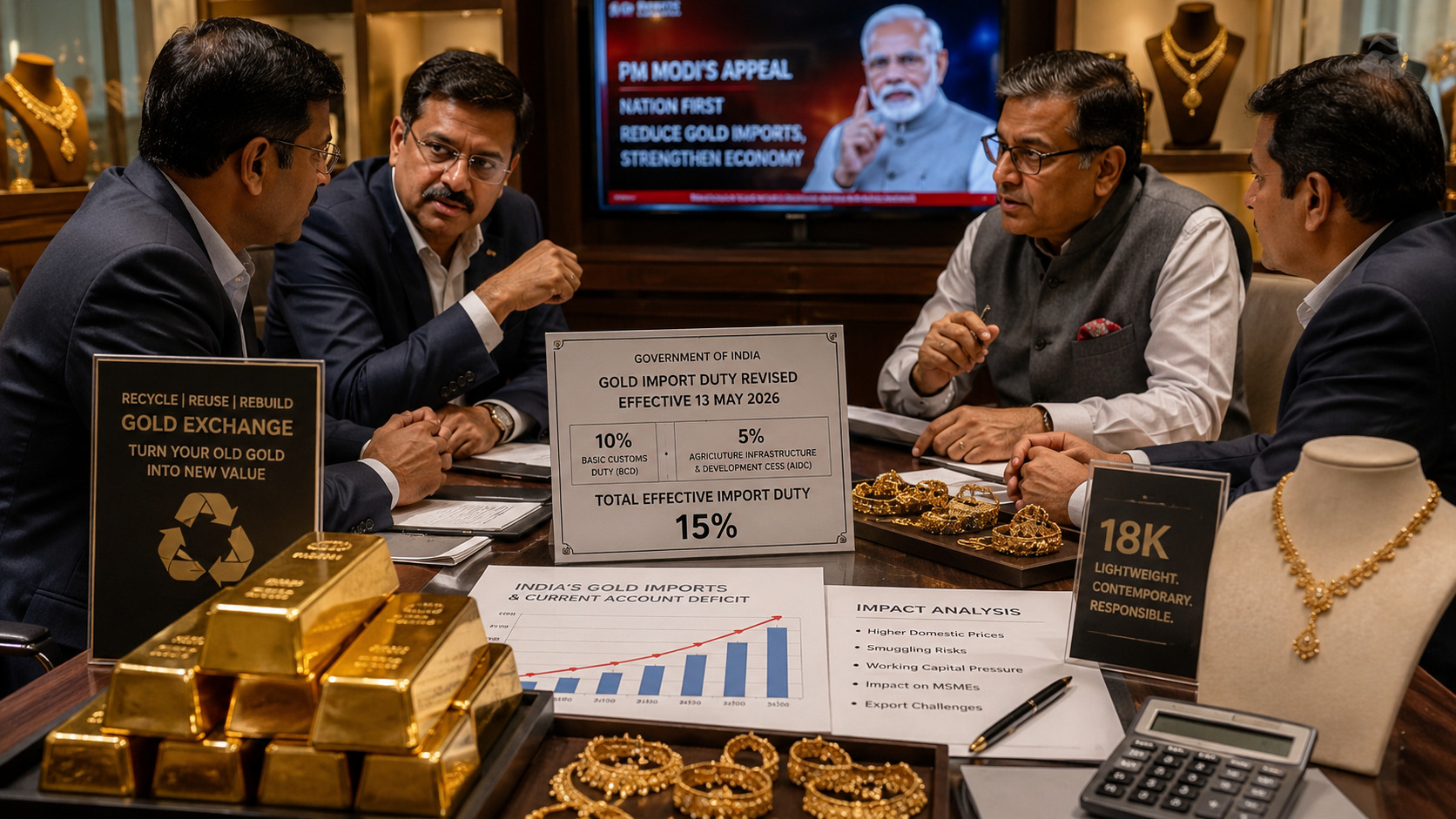
Gold imports increased 27.4% in FY25, driven by a 38.2% rise in global prices and strong domestic demand, contributing to a merchandise trade deficit of $ 283.5 billion. Gold and silver also created a 235-basis-point wedge in core inflation, which would have been 2.3–2.4% without precious metals.
Foreign exchange reserves reached $ 701.4 billion by January 2026, with gold rising to $ 117.5 billion, while the G&J sector remains outside the PLI scheme.






Be the first to comment