


Retailers highlight how financially independent women are increasingly buying jewellery for themselves, boosting demand for lightweight gold and diamond jewellery across metros and smaller cities, finds out Dhwani Rathod.
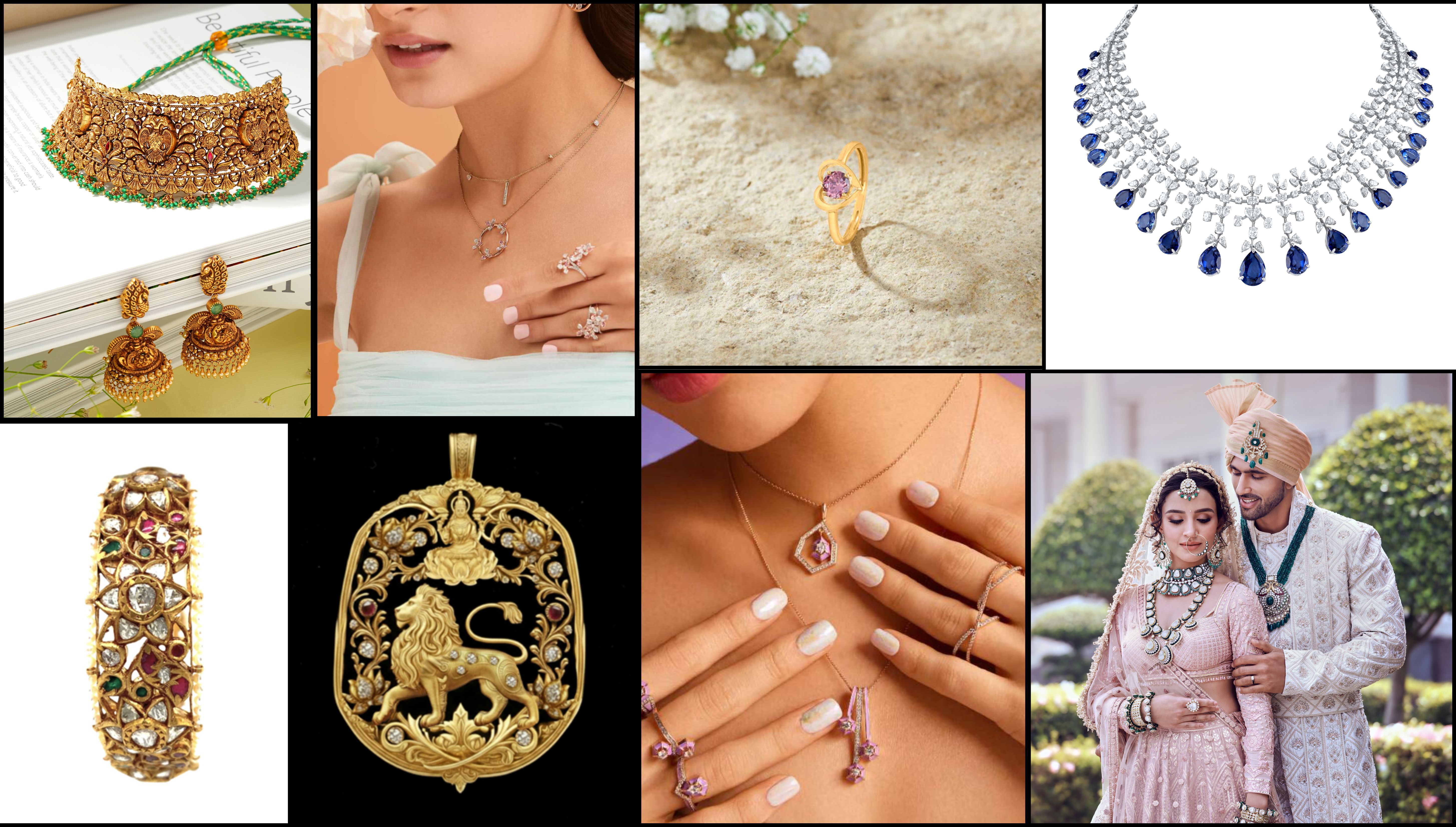
Jewellery retailers across India are witnessing a notable shift in consumer behaviour. Women are no longer waiting for weddings, festivals, or family occasions to buy jewellery. Instead, many are purchasing it for themselves to celebrate achievements, and express personal style, thus integrating jewellery into everyday life.
Retailers say this change has been building steadily over the past decade. Greater financial independence, evolving career paths, and changing lifestyle aspirations have all contributed to women becoming more confident, and intentional jewellery buyers. The shift is influencing not only the frequency of purchases, but also the type of jewellery in demand.
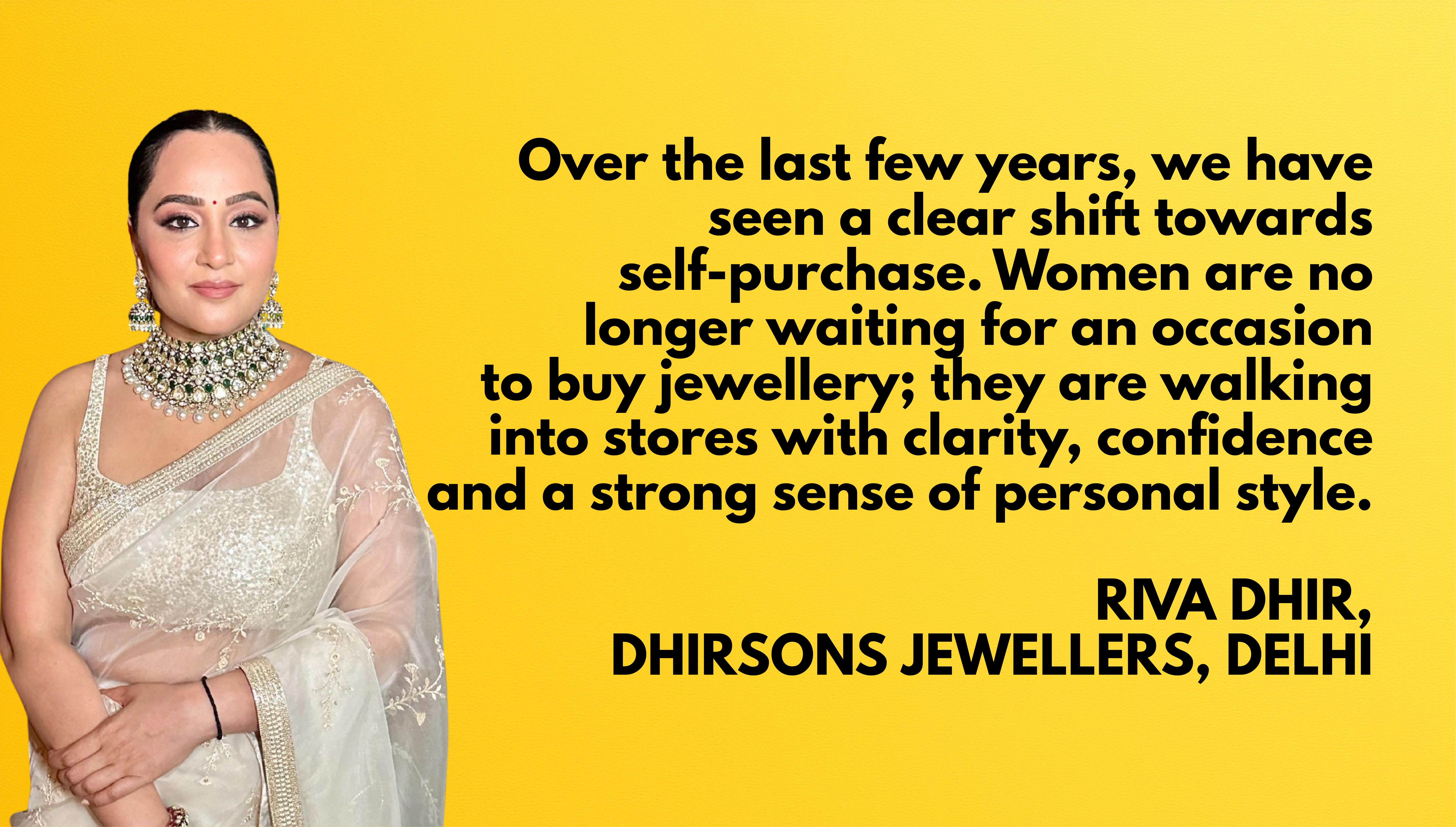
Riva Dhir, Dhirsons Jewellers, Delhi, says the change is visible both in how women shop, and in what they look for in jewellery today. “Over the last few years, we have seen a clear shift towards self-purchase. Women are no longer waiting for an occasion to buy jewellery; they are walking into stores with clarity, confidence, and a strong sense of personal style. Jewellery today is as much about celebrating personal achievements and everyday moments, as it is about tradition.”
This evolving mindset is also shaping design preferences. According to Dhir, women are increasingly drawn to pieces that fit seamlessly into modern lifestyles. “There is growing interest in versatile jewellery that transitions easily from work to evening, and in diamonds that feel elegant, yet understated. The buying journey has become more intentional, with women asking detailed questions, and making independent choices.”
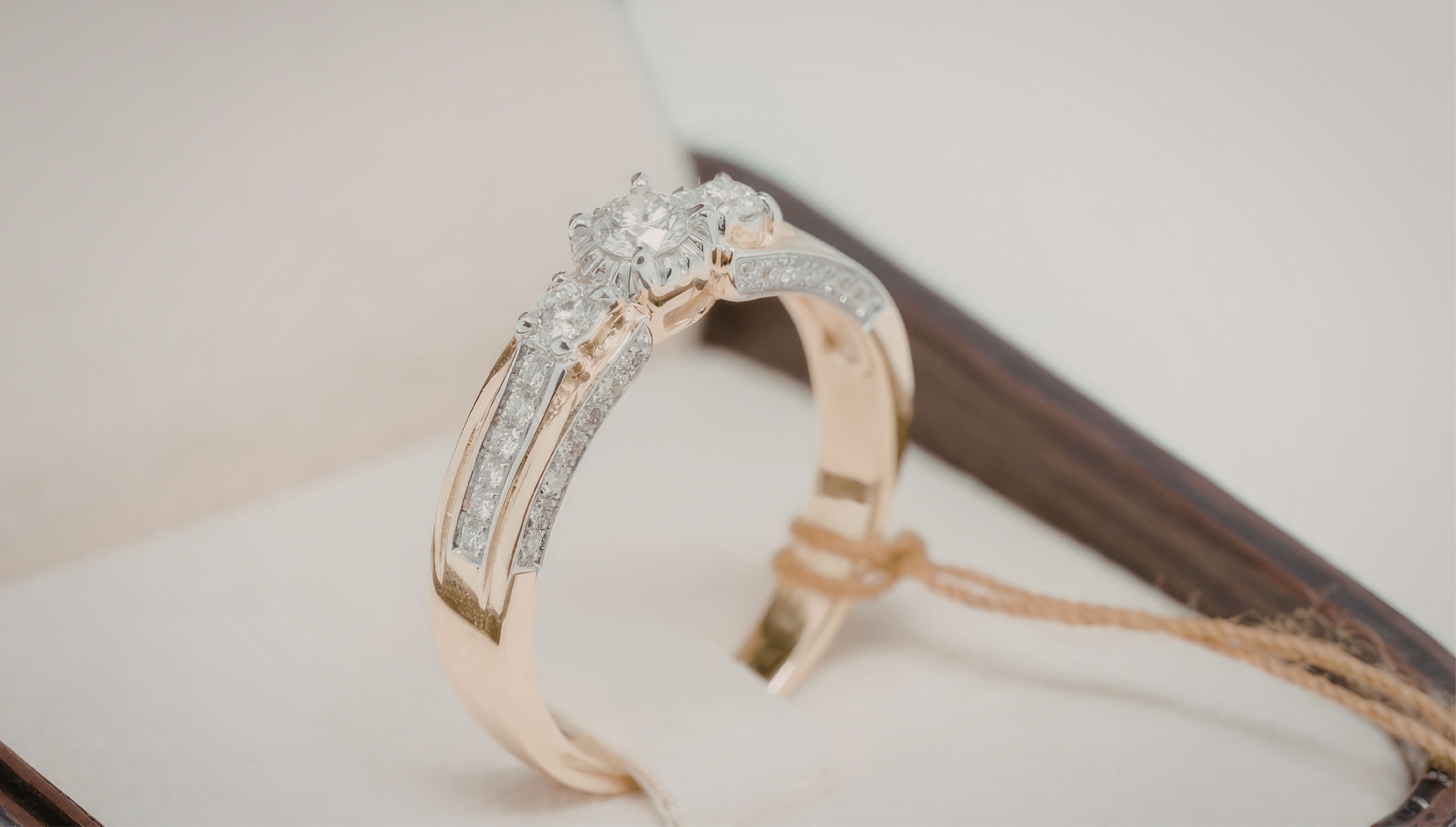
One of the clearest outcomes of this shift is the rising demand for everyday diamond jewellery. Diamonds are increasingly being viewed not only as bridal purchases, but also as lifestyle accessories suitable for regular wear.
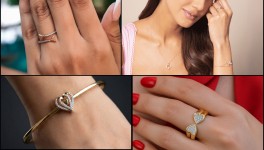
Retailers say minimalist pieces, such as studs, pendants, and delicate bracelets are driving this growth. These designs combine elegance with practicality, allowing consumers to incorporate diamonds into daily wardrobes.
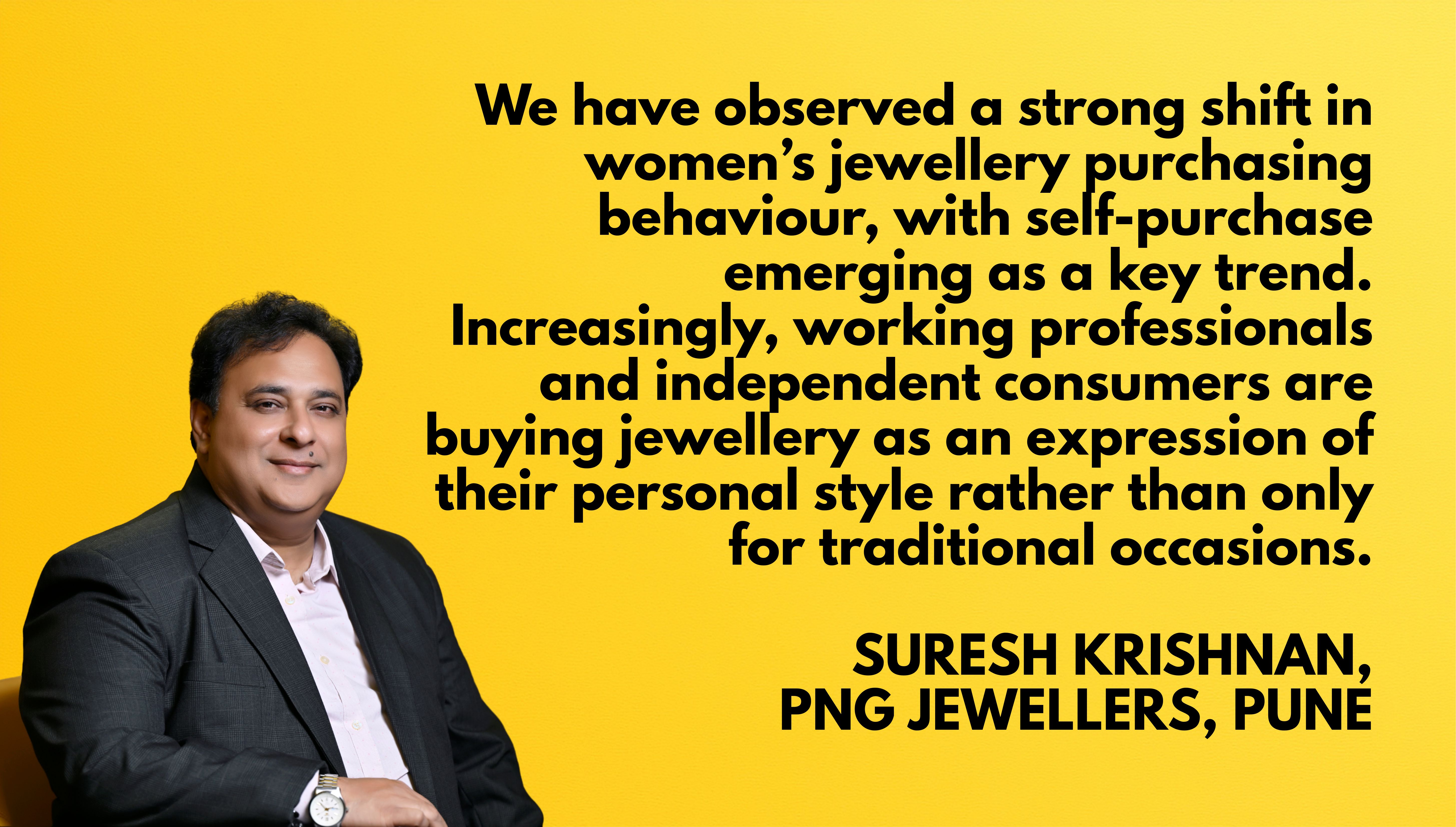
Suresh Krishnan, PNG Jewellers, Pune, says the trend towards independent buying is particularly noticeable among working professionals. “At PNG Jewellers, we have observed a strong shift in women’s jewellery purchasing behaviour, with self-purchase emerging as a key trend. Increasingly, working professionals and independent consumers are buying jewellery as an expression of their personal style, rather than only for traditional occasions.”
Krishnan notes that the demand for wearable, versatile jewellery has expanded the role of diamonds within retail assortments. “We are witnessing strong growth in the everyday diamond jewellery segment. Customers are choosing minimal and elegant pieces, such as pendants, stud earrings, and delicate bracelets that complement daily wear, while maintaining sophistication.”
Alongside everyday diamonds, lightweight gold jewellery is emerging as another strong growth segment. Pieces that combine practicality with contemporary aesthetics are becoming increasingly important in retail collections.
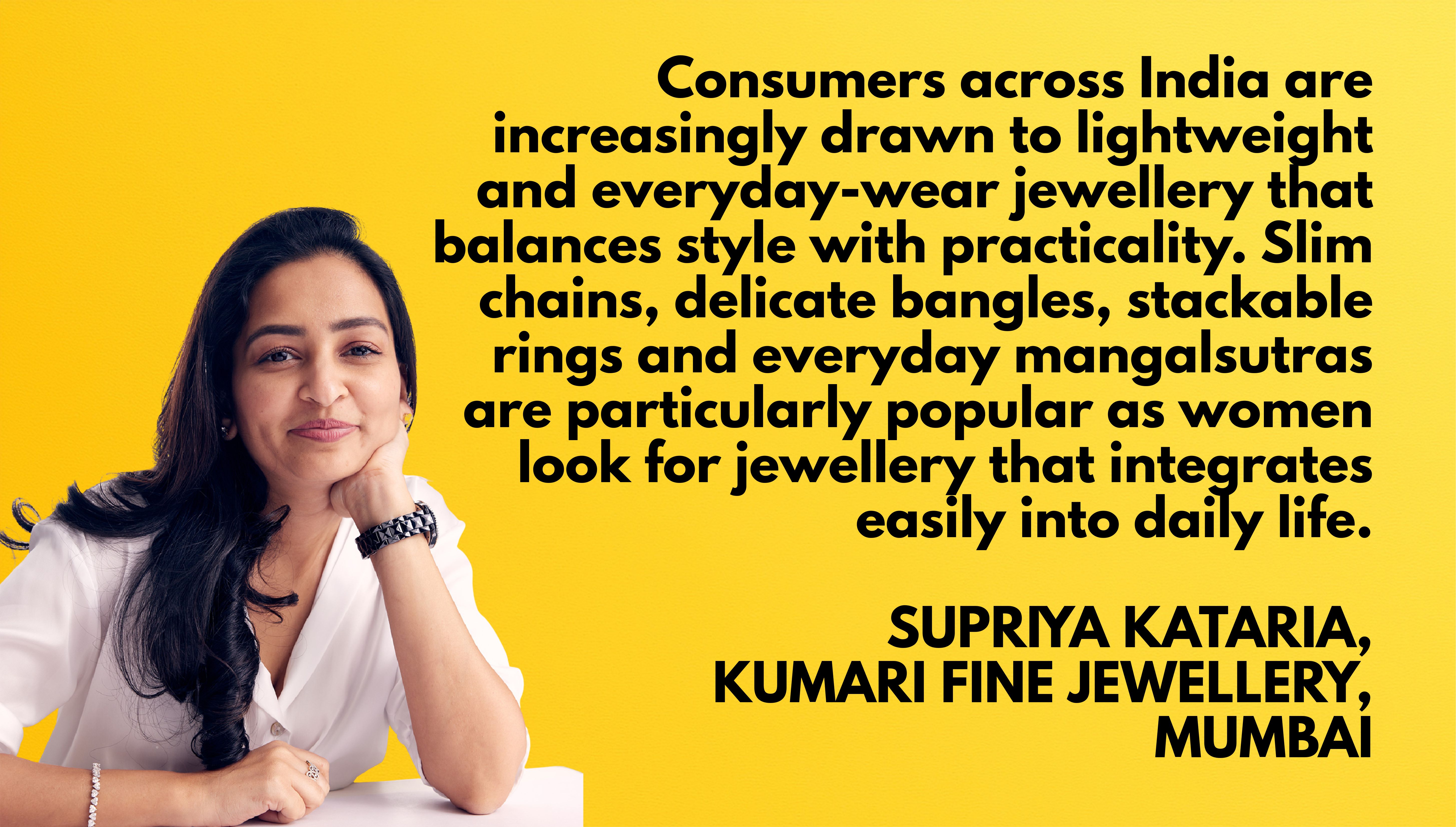
Supriya Kataria, Kumari Fine Jewellery, Mumbai, says consumers are seeking jewellery that fits naturally into their daily routines. “Female consumers across India are increasingly drawn to lightweight and everyday-wear jewellery that balances style with practicality. Slim chains, delicate bangles, stackable rings and everyday mangalsutras are particularly popular, as women look for jewellery that integrates easily into daily life.”
She adds that minimalist diamond jewellery is also gaining traction among younger buyers, saying, “Pieces such as diamond studs, pendants and layerable necklaces are seeing strong demand, especially among younger consumers who prefer designs that complement both Western and traditional attire.”
As a result, many retailers are expanding product assortments to include a wider range of lightweight gold jewellery, and subtle diamond pieces positioned at accessible price points.
Beyond self-purchase, retailers say women are also playing a more influential role in shaping jewellery choices within families. Dhir explains that even when women are not the direct buyers, their opinions increasingly guide purchase decisions for occasions such as weddings, gifting, and festive celebrations. “Women are central to almost every jewellery decision today, even when they are not the direct buyers. Families consult them for design direction, styling inputs, and even budget alignment, and their preferences often shape what ultimately gets purchased. In many cases, they are introducing more contemporary design sensibilities, while still respecting tradition, encouraging lighter and more wearable jewellery that fits modern lifestyles.”
While the broader trend of self-purchase is visible across India, retailers say consumer behaviour still varies between metropolitan markets and smaller cities. Vikas Kataria, DP Jewellers, Ratlam, says, “In metros, women are more experimental and trend-driven. They actively explore contemporary silhouettes, layering concepts and diamond-forward designs for everyday wear. In smaller cities, aspiration levels are equally strong but purchases are often more purity-focused and value-conscious. However, the shift towards self-purchase is clearly visible across both segments.”
As women become more influential buyers, retailers are adjusting their merchandising and store strategies to reflect these evolving preferences. Says Kataria (Vikas), “We are consciously expanding our lightweight gold and everyday diamond categories with sharper price segmentation to support self-purchase decisions. Store layouts now highlight daily-wear zones to make browsing easier and less occasion-driven.”
For many retailers, the transformation in women’s jewellery buying behaviour has been unfolding gradually over decades. Says Meenu Subbiah of Meenu Subbiah Diamonds, Chennai, “When I started about 33 years ago, jewellery purchases were largely family-driven. Women would usually come with family members, and jewellery was often bought for daughters or daughters-in-law rather than for themselves.
“In the past 15 years especially, women have increasingly started buying jewellery for themselves. Today we also see many young women beginning their jewellery journey early by purchasing their first diamond piece. The shopping experience itself has evolved as well, with many women now visiting stores independently, or with friends, rather than as part of family groups.”
The rise of self-purchase reflects a broader transformation in how women engage with jewellery. What was once primarily a symbol of tradition is increasingly becoming a personal statement of confidence, achievement and identity.
For retailers, this shift presents both an opportunity and a strategic imperative. As women continue to shape jewellery demand through their preferences and purchasing power, brands are rethinking product design, merchandising and storytelling to better align with the aspirations of the modern consumer.
Be the first to comment