


As India raises gold import duty from 6% to 15% amid economic pressure and a weakening rupee, the jewellery industry is preparing for higher prices, evolving demand, and possible market disruption, discovers Khursheed Mistry.
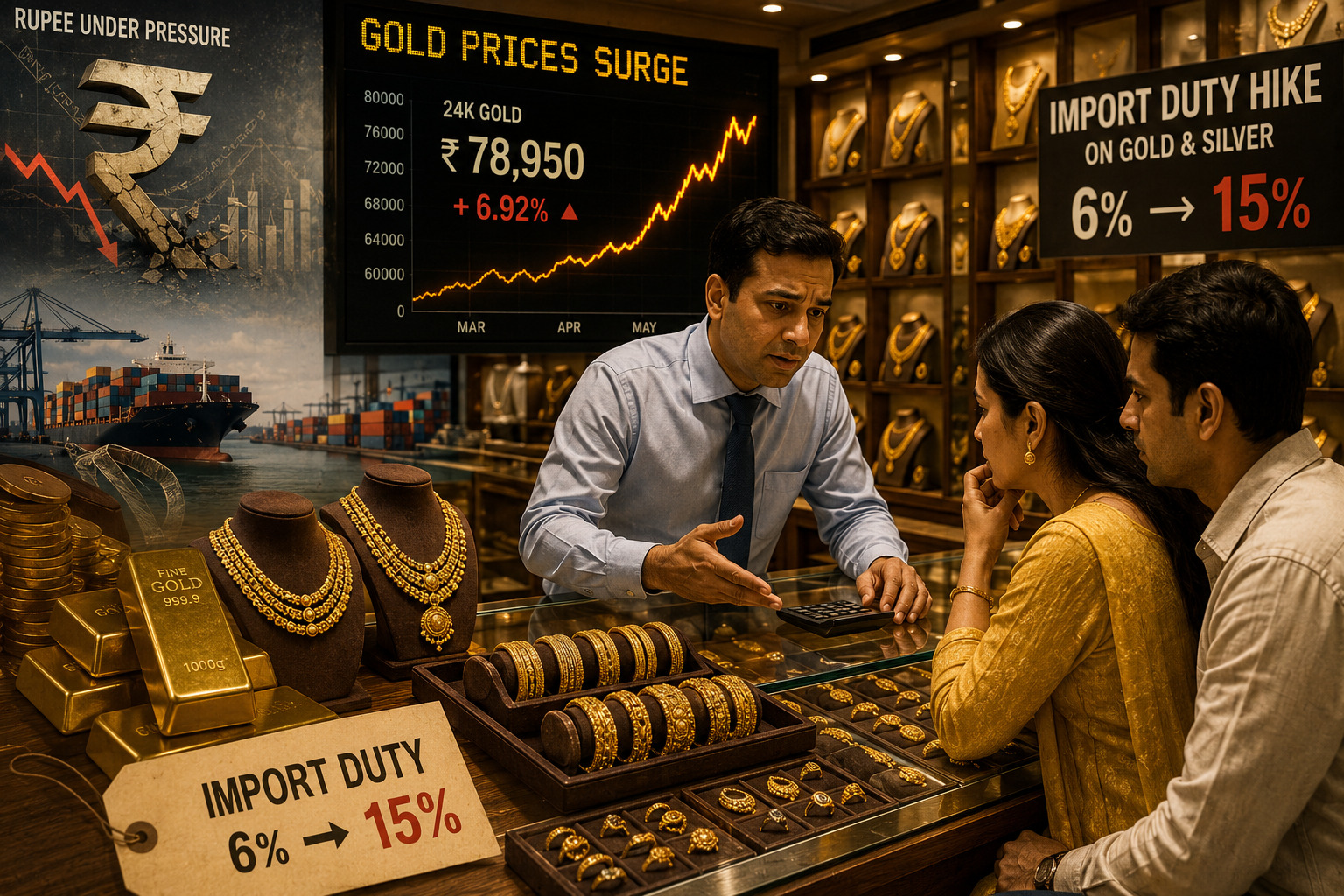
India’s jewellery industry is facing a sharp policy shift. The government’s decision to increase import duty on gold and silver from 6% to 15% marks one of the steepest revisions in recent years. The move comes at a time when the country is dealing with rising crude oil prices, pressure on foreign exchange reserves, and a weakening rupee.
For the jewellery trade, the implications are immediate. Higher landed costs, volatile bullion prices and uncertainty in consumer sentiment are expected to reshape business conditions over the coming months.
India remains one of the world’s largest gold consumers, and depends heavily on imports to meet domestic demand. According to reports, the country imported nearly $72 billion worth of gold in the last financial year. At the same time, India’s foreign exchange reserves have come under pressure due to rising energy costs. With the country importing over 90% of its oil requirements, the ongoing crisis in West Asia has significantly widened economic concerns.
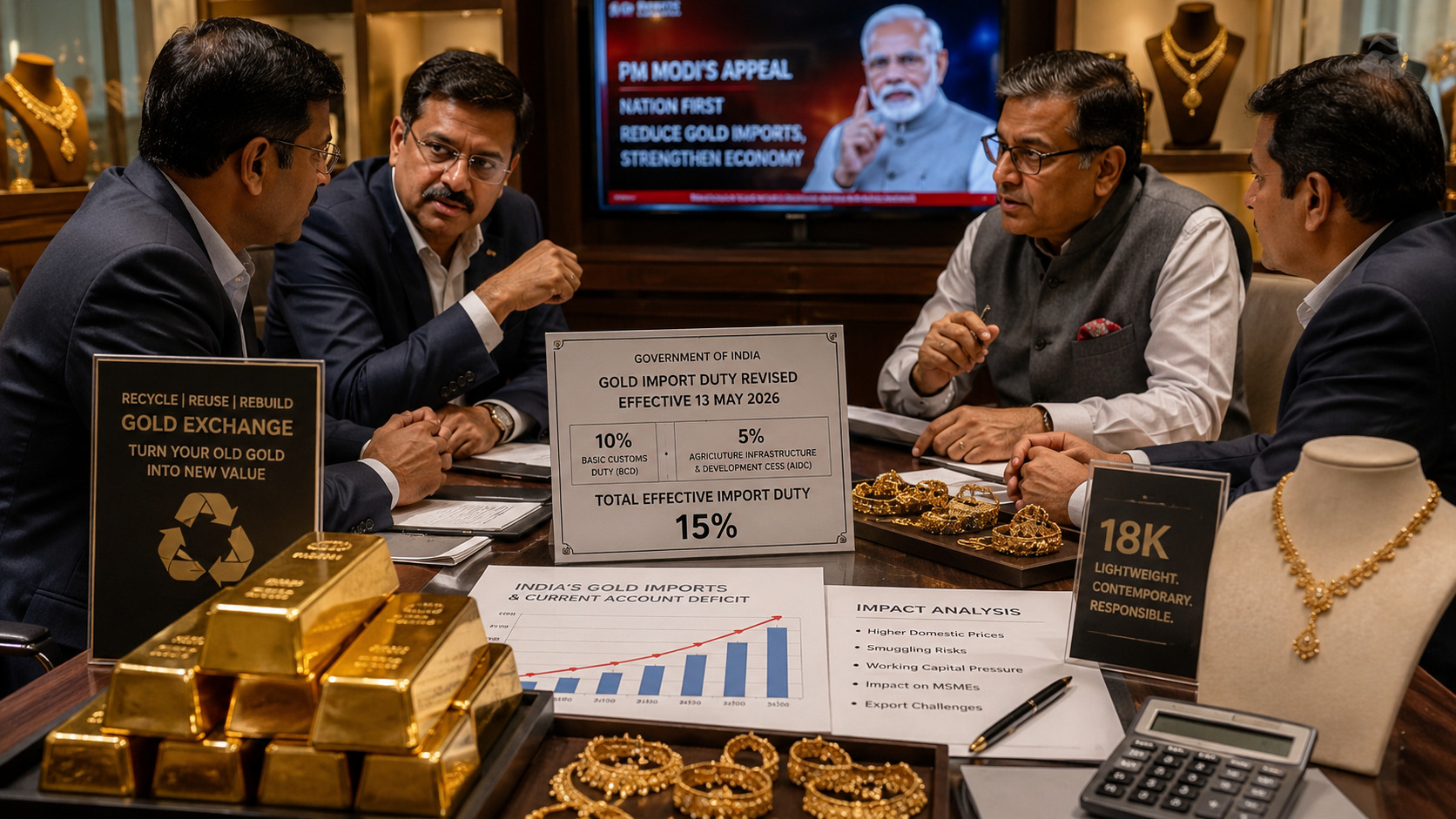
The government’s response has been to curb what it considers non-essential imports, including precious metals. Prime Minister Narendra Modi recently urged citizens to reduce gold buying, foreign travel, and fuel consumption as part of a broader austerity push. The increase in customs duty is now being viewed as a direct policy measure to slow gold imports, and conserve dollar outflow.
The market reacted within hours of the announcement. Domestic gold prices surged sharply after the revised duty structure came into effect on May 13 2026. Reports indicate bullion prices rose nearly 7% in a single trading session. The revised structure includes a 10% Basic Customs Duty, and a 5% Agriculture Infrastructure and Development Cess. Earlier, these stood at 5% and 1%, respectively.
For consumers, this translates into significantly higher jewellery prices. A purchase that earlier attracted around 6% import-related costs will now face a much steeper burden. Wedding and festive buying, especially in value-sensitive markets, may witness short-term hesitation. Retailers are expected to face difficult conversations with consumers over pricing, making transparency and communication more important than ever.
While higher prices may temporarily slow discretionary purchases, the Indian market has historically shown resilience during periods of price volatility. Gold continues to hold emotional, cultural, and investment value across Indian households. Weddings, festivals and gifting cycles are unlikely to disappear because of higher duty structures. However, buying behaviour may evolve.
Consumers may move towards lighter jewellery, lower ticket purchases, old gold exchange, and more value-conscious buying. Retailers may also witness stronger traction in studded jewellery, where the weight of gold is relatively lower. Bridal demand may not decline sharply, but purchase timelines could stretch, as consumers wait for price stability. For organized retailers, this period may require tighter inventory planning, and sharper product segmentation, rather than aggressive expansion.
One of the biggest concerns emerging from the trade is the possibility of rising unofficial gold inflows. The industry has seen this before. In 2013, sharp increases in gold duty led to a spike in grey market activity. Sections of the industry are now drawing parallels between the current move, and that period.
Higher duty differentials often make illegal channels more attractive, especially when domestic prices rise significantly above international benchmarks. This creates challenges not only for revenue collection, but also for organized retailers and compliant manufacturers who operate within formal systems. The jewellery industry may now seek stronger enforcement measures and policy dialogue to ensure the organized trade does not lose competitiveness.
The government’s decision reflects the difficult economic balance India currently faces. On one hand, policymakers are attempting to protect the rupee, manage foreign exchange reserves, and reduce import pressure. On the other hand, the jewellery sector remains a major contributor to employment, exports, and retail consumption.
The coming months will determine whether the higher duty successfully reduces imports without severely impacting domestic trade sentiment. Much will also depend on how global oil prices move, and whether geopolitical tensions ease. For now, the jewellery industry is entering another phase of adjustment, one that will test pricing strategies, consumer confidence, and operational discipline across the value chain.




Be the first to comment