


As bridal tastes evolve, and retail cycles shorten, India’s polki industry is being redesigned for lighter wear, faster movement and commercial relevance, transforming a heritage craft into a modern retail category, says Dhwani Rathod.
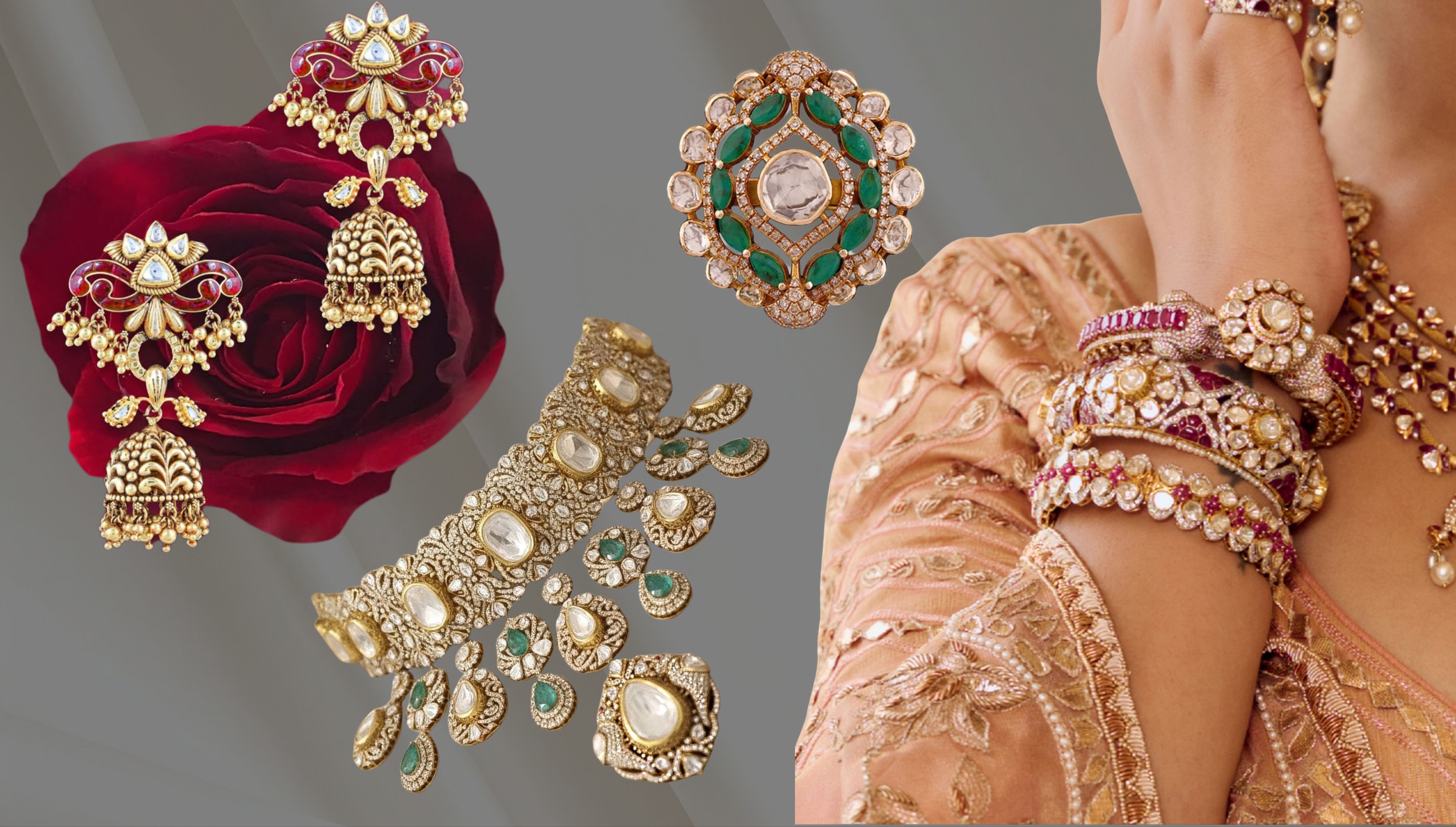
For generations, polki jewellery in India was shaped by tradition, craftsmanship and bridal demand. It was designed for weddings, and passed through families, and rarely treated as a fast-moving retail product. Today, that legacy is being challenged. Changing bridal aesthetics, pastel wardrobes, destination weddings, and a rising preference for lighter jewellery are forcing polki to move beyond the workshop, and prove itself on the showroom floor.
Retailers now demand collections that turn faster, appeal across seasons, and connect with younger buyers who see jewellery as part of everyday styling, not just ceremonial wear. With competition from diamonds, coloured stones and contemporary gold jewellery intensifying, polki is being reimagined as a commercial category — one that must be engineered for speed, versatility and visual impact.
Manufacturers are no longer designing polki only for grandeur. They are now solving practical retail problems — weight, comfort, price range and versatility. Vikas Mehta, Achal Jewels, Jaipur, says the category now spans a far wider commercial spectrum than before.
“Basically, within polki jewellery, we create a complete range starting from Rs 20,000, going up to Rs 60,000–Rs 70,000, and extending further to Rs 70 lakh to Rs 80 lakh, and beyond, because today polki has to serve different customer segments, not just bridal trousseaus. Service is the most challenging aspect, and trust is what builds long-term relationships,” says Mehta.
Manufacturers are also borrowing global techniques -- Mehta says international markets have reshaped how polki is engineered. “We travel to Hong Kong and Turkey, study mechanisms, and incorporate those learnings into polki by improving bangle locks, creating multi-wear earrings, making necklaces lighter, developing new settings, experimenting with antique finishes, and even creating proprietary colours,” he says.
Alongside structural innovation, colour and stone choices are also evolving, with emeralds, tourmalines and aquamarines driving freshness and seasonless appeal.
Polki is now being designed with a shelf-life in mind. Shrey Nigotiya, Nine Jewellery, Jaipur, says manufacturers must think like retailers. “The eventual goal for a manufacturer is that we sell to a retailer, and it should sell to the customer as well, so we create what is trending, and what will trend, because jewellery should not be stuck on a shelf for more than three to four months,” says Nigotiya.
Pastel wardrobes and white polki have changed design direction. Heavy necklaces are being replaced by bold, lightweight statement earrings, optimized through CAD to reduce gold weight.
“Today’s generation does not want anything on the neck; youngsters want long statement earrings that look bold, but feel light, so we focus on weight optimization, design strength and wearability, while keeping the look strong and classic,” Nigotiya adds.
Anuj Khandelwal, Jaipur Ratna, Jaipur, explains that polki must fit into a broader commercial mix. “A retailer should operate on the 80–20 principle, where 80% is bread-and-butter jewellery that sells consistently, while 20% is unique bridal jewellery that builds brand impact, because wow pieces do not always convert,” says Khandelwal. With wedding seasons limited, lighter polki plays a vital role in year-round demand.
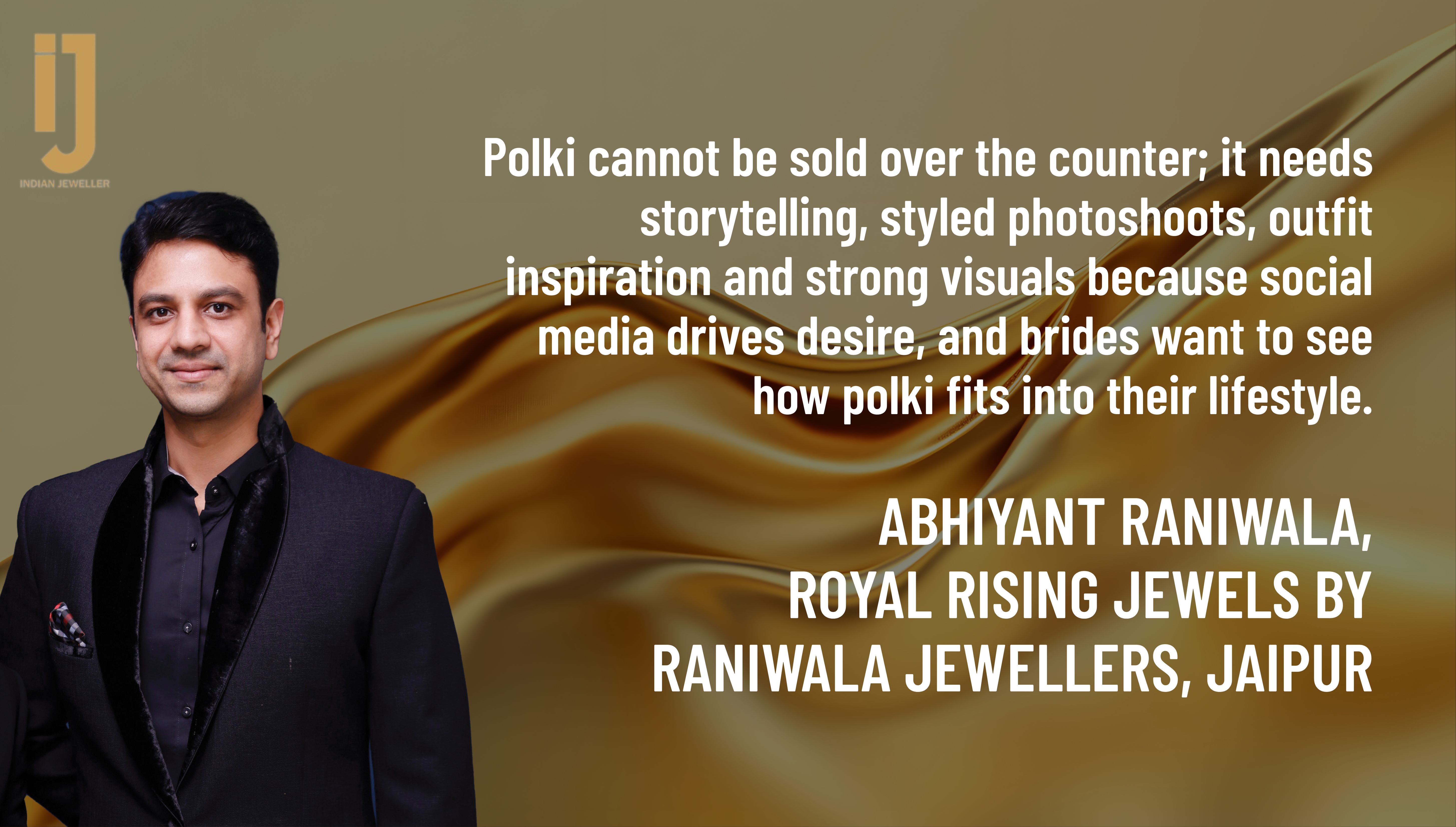
Polki today sells through emotion, not price. “Polki cannot be sold over the counter; it needs storytelling, styled photoshoots, outfit inspiration and strong visuals because social media drives desire, and brides want to see how polki fits into their lifestyle,” says Abhiyant Raniwala, Royal Rising Jewels by Raniwala Jewellers, Jaipur.
In the end, one can say that polki is now designed for speed, balanced for retail, supported by manufacturers, and sold through stories. Its future lies in collaboration, innovation and retail intelligence — not tradition alone.



Be the first to comment